Reel to reel
- Teac mixers
- Simul rec
- Teac A-3440
- Tascam history
- Reel to reel tapes info
- Reference Tapes - Calibration
- Plakkende tapes afspelen
- Identificatie van reel to reel tapes aan de hand van de aanloopstrook
- Tape reference level
- Studer A80 history
- Revox PR99 reference level
- NAB vs. IEC
- Technics 1500 - 1700
- Technics SL-P777
- Technics RS-BX501
- Revox PR99 history
- Otari Mx-55 N-M
- Flux Level Standards
- Use NAB test tape to calibrate IEC deck and vice versa
- Revox B215
- Otari NAB Adapters
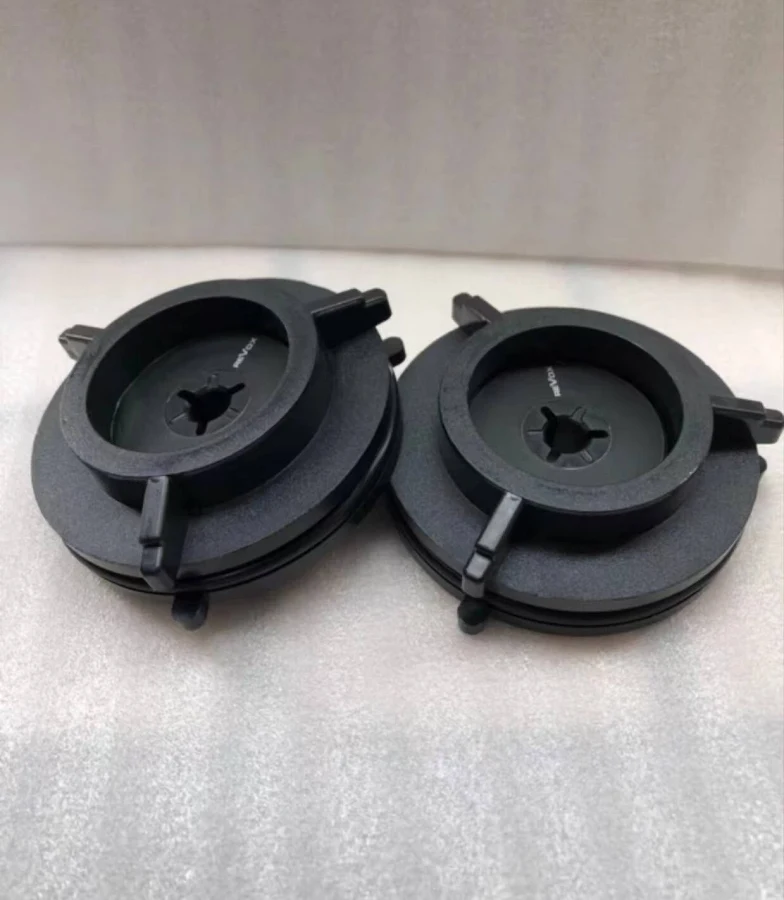
- Revox NAB Adapters
Teac mixers
- 5a !!!

- model3
- Model 3 8-In, 4-out 2 Monitor (8x4x2) portable mixer.
- 1983...M-30
- M-35 (8x4x2)an 8-in, 4-out, 8 monitor
- M-35EX expansion to 28 inputs.
- M-50 12 input, 8-buss 2 aux
- M106 (6x4x4)
- M208 !! (1985 8x4x2)
- M216 (16x4x4)
- M308 (8x4x8)
Simul rec
capture card -> recorder options -> max recordings : 3 is a sensible setting
Teac A-3440
As an A-3440 enthusiast, I'm glad to hear you were able to get the issue resolved, thanks to Sam, he's the man!
I'm just curious if you can check the serial # on the back of yours, which indicates the manufacturing date (the digits on the right side of the s/n). I believe the A-3440 was introduced in '78 (not sure if was the beginning of the year, or more toward later), along with its matching 2A mixer. (My older brother bought one new back in '79, when I was a teenager).
The Tascam 34 came out in '82-'83, but I find it interesting that the A-3440 didnt seem to be discontinued, and was still being made at the same time as the 34. Does anyone recall what the $ price difference between them was?, just curious. I have a collection of Teac/Tascam literature, and it appears that the A-3440 and 2A were still around as late as 1984. Anyone know if the 40-4 made it that far as well?
I was also curious if there were any revisions made to the A-3440 during its production run. Is an '83 A-3440 exactly identical to a '78 model, or are any circuit boards and components, etc different? I know the Model 2 (2A) mixer had a few slight changes- the knob colors and fader controls, and also had the raised meter bridge with faux-wood panels... Just a few lil' details I find interesting, if anyone else might also relate.
Tapetech,Yes .the two micro swt's that the tension arm makes contact with.The one that engages the pinch roller was bad.Teac p/n is 51300010.
Hi BeatleFred, The items in the A3440 that need attention are pots, capstan motor and belt as well as the Pinch Roller Linkage for grease issues. I have had a few electronics failures in the past but I would say that the electronic failures will come more often due to caps than in the past. The changing of a lot of Electrolytic caps by a good technician can not be that hard as the cards pull out the bottom and can very easily be done on the bench. Much easier than an X1000R or A3340S. They should be changed as they are going to be drying up. After 30 years of sitting and power being applied scarcely they can not be that long lasting plus this is not a large investment in parts.
Who knows, in 2 or 3 years the current Electrolytic capacitor might be all gone due to lack of manufacturing and then everyone will be scurrying around trying to find some and end up with the Chinese caps that won't be a plus to use. Nobody sees this better than I on the front line. Get them done, date the board as to when and move on using a well operating machine. The RX-9 is a unit that could have problems due to the high use of relays.
The real solution is to use the better DX-4D unit as they do both jobs all the time- the is 4 encoders and 4 decoders all the time. The control cable is not needed in that case as it was for encode and decode switching depending on mode. They (RX-9) are going to be costly to repair as well. The dBx units are used for NOISE REDUCTION and nothing else. They do not make the music more dynamic and if they do that is because the deck is out of calibration and is showing a double error in the record process. When you use two track you can get away with no noise reduction, when you strat mixing the noise adds up. When you get to 8 tracks you for sure need it. With 4 tracks that can be a matter of opinion and a part of the recording process. I used it in many demos I did and it worked well all the time- then again my machines were well calibrated at the time unlike some peoples' decks that can be far off and the dBx just makes it worse. The FV cable and circuit in the DX-4D can be removed and circuit disabled- I have done a few and there is no need for that cable anymore. The DX-4D can then work just fine as long as the proper nominal levels are put into it.
Output levels and mixer settings. The reason a mixer or tape deck is set at what is called specified output level is that this is a setting which is giving a known output at approximately a 70% gain setting. Most mixers have a grey area on the panel at 70% area. This is put there not to make it pretty but to give indication that this is the unity gain setting of that circuit. The Unity gain setting is one where neither gain or attenuation is used for the signal. Gain adds noise as the signal is too low, attenuation is needed because the signal is too high. Due to power supply rails, it is best to stay inside of the good operating position of the power supply rather than having the decks output at max (again a gain setting) and to allow the deck to put out a sufficient signal without hitting the clipping point or that of exceeding the power supply rails that an Op Amp can handle. In studios I always set my machines up for the specified output position and then leave it there.
Tape pack is one thing that the newer better machines do best. They should all be this way but over time the tape deck makers did not start all of their decks out with the most latest technology. The decks like the Tascam 52 can wind tape with little scatter. The spooling mode packs the tape as if it was just played. The Tascam 42 does the same thing but looses some control over the tape due to the arm configurations. That is why the Omega drive was made and included in the 50 and 60 series decks. All you can do on a A3440 is to use good back coated tape and to make sure the reels you use and TZ612 are in good shape and to try and not get the reel tables damaged. The tension arms need to be kept clean and edges to a minimum and polished. It can make a world of difference like when JRF gets done polishing a head stack, there is no tape handling problem when he is done and the overall performance is enhanced due to it. This does not make the tape pack different but it travels across the heads much better.
Oh, the electrolytic caps should be changed prior to calibration as the better caps will make gain changes. I don't know of anyone who is willingly using 60 year old Electrolytic capacitors in their circuits.
I hope this addressed all the questions you had.
---
My older brother bought a 3440 new back in 1979 when I was a teenager and I remember being quite impressed with it.
I have two of them, one that I bought in '94 and another that I acquired on Ebay about five years ago. I also have several Model 2A mixing boards (the 2 and 2A being the matching mixer to the A-3440, and its even better if they come with the MB-20 meter bridge). The RX-9 was the matching noise reduction unit that fits directly underneath the recorder if you remove its feet.
The Ebay seller had done most of the maintenance on it, but I havent had the free time to use the recorder in a long while, so I'm hoping when I start using it again soon that I wont have to confront any major issues from it being inactive so long, other than replacing the belt which most likely will need to be done.
I always thought the A-3440 was a great unit, I just love the way it looks and sounds. I have all the literature on it- brochures, manuals etc. I find it interesting that even though Tascam introduced the 34 in the early 80's, the 3440 was still in production and not discontinued. I have a Teac catalog from '84-'85, and the A-3440/2A are still shown. By the way, you can find the manufacturing date of your recorder from the serial # in the back. There is a sequence of digits and then a two digit # - for example, an 03 would mean the 3rd quarter of 198>0. (1980).
A great magazine was 'Modern Recording'- I'm glad I saved all the issues I bought back in the day along with what my brother had when he subsribed- alot of good info in there on various Teac/Tascam equipment.
I think the A-3440 is geared more toward home recording/multitracking, rather than as a straighforward recorder like an X-2000/1000 etc... But if anyone desires one, the A-3440 is not that difficult to find on Ebay, people are still buying them for a reasonable price.
http://www.youtube.com/results?search_query=teac+a-3440
Tascam history
1979 (cont.)... TEAC introduced the A3440 1/4 inch multitrack, an upgraded 4- track open reel recorder. Even thought the A3440S had the TEAC brand name, it was sold by the TASCAM sales organization through music stores.
1983...TASCAM introduced the 30 series recorders. The TASCAM 38 was a 1/2", 8-track, 10 1/2" reel-to-reel recorder. Introductory price was under $3,000. The 38 filled a niche for the serious entry level recordist. The TASCAM 34 was a 4 track recorder with full frequency response in Sync Mode at an inexpensive price. The TASCAM 32 was a half track master recorder/reproducer using 1/4" tape.
1986- Tascam 34B
1991- The TASCAM 1500 Series were 4-buss recording consoles with 8 directly assignable outputs. The M1500 series included an 8-input version, the M1508, and a 16-input version, the M1516. ===== Full history:
Teac/Tascam models list rom our ads and catalog collection
|
1960 - Teac 505 |
|
1961 - Concertone 505 |
|
1966 - A-610, A-5050, A-4010S, A-3010, A-1200, A-4020, A-2020, A-1600, A-1500,R-310 |
|
1967 - R-1000, R-1100, A-4010, A-4020, A-2020 |
|
1968 - A-4010S, AS-200, A-6010, A-1200 |
|
1969 - R-310, A-1200U, A-6010, A-4010S, A-4010 SRA Quad |
|
1970 - A-100, A-1200, A-1500, A-1500U, A-6010, A6010U, A-7030, TCA-40, TCA-41, TCA-42 |
|
1971 - A-1200U, A-1500, A-6010U, A-7010U, A-7030U, A-3300, 4010SL, 6010SL, 7010SL, 7030SL, 3300-10, 3300-11, 3300-12, 1230, 1250, 4070, A-1200, TCA-40, TCA-41, TCA-42, An-180, AN-80, An-50 |
|
1972 - 2340, 3340, TCA-43 (1st Simul-Sync), A-4010GSL, 6010SL, AX-300, AN-300, A-6100, An-180, AN-80, Tascam Series 70, Tascam Model 10 mixer |
|
1973 - 1230, 1250, 4010GSL, 6010GSL, 7010GSL, 7030GSL, 4070GSL, 3300-10, 3300-11, 3300-12, 2340, 3340S, TCA-43, AX-300, AN-300, Tascam Series 70, Tascam Model 10 mixer |
|
1974 - TASCAM acquired by Teac, Tascam Series 70, Tascam Model 10 mixer, Model 5 mixer, Teac 2340, 3340S |
|
1975 - A-2300 SX, A-2300SD, A-3300SX, A-3300SX 2T, A4100, A-4300SX, A-6300, A-7300, A-7300 2T, A-3340S, A-2340SX, Model 2 mixer with MB20 meter bridge, AX-20 mix down box |
|
1976 - Tascam 80-8 (used for Star Wars R2D2 sound), Model 1, Model 10B, Teac A-7300RX, A-3300 2T,A-2340, A-3340, Model 3 mixer, Model 5 mixer, Series 80, 40-4 |
|
1977 - Tascam DX-8, Model 25-2, Tascam 80-8 (Star Wars released), 25-2, A-2300SX, A-2300SR, A-2300SD, A-3300SX, A-3300SR A-3300SX 2T, A-4300SX, A-6300, A-6600, A-7300, A-7300 2T,A-3340S, A-2340SX, Model 2 mixer with MB20 meter bridge, Model 5 & Model 5EX, Studio 4000, 40-4, Model 3 mixer |
|
1978 - Model 2 mixer, model 15 mixer, Tascam 80-8 (used for Star Wars R2D2 sound ads), Model 5A mixer, 25-2, Studio 8000, A-2300SD, A-3300SX 2T, A-4300SX, A-3300S, A-2300S, A-3340S, A-2340S, A-7300, A-6300, A-6100 |
|
1979 - Tascam 90-16, Teac 3440, Model 144 Portastudio, 80-8, 40-4, 35-2, 5B & 5BX, Model1, |
|
1980 - Tasccam 85-16, A-3440, A-3300SX 2T, A-2340SX, Model 2, MB20, A-6100MKII, GE-20 eq, 80-8, X-3, X-10R, ATR-700 built for Ampex, |
|
1981 - Tascam 80-16, System 20, Model 15SL mixer, 80-8, 40-4, Model 1 mixer, System 20, 22-2, 22-4, ATR-700 built for Ampex |
|
1982 - Tascam Model 15 SL, 80-8, Model 16 mixer, 85-16B, M-30, M-35 mixer, 32, 34, 38, 22-2, 22-4, Teac X-10, X-10R, X-20R, System 20, A-3440, X-1000R, ATR-700 and ATR-800 built for Ampex |
|
1983 - Tascam 38, Tascam 58, , ATR-700 and ATR-800 built for Ampex, 22-2, 22-4, Series 50 52, 58, 80-16B, System 20, M50 mixer, M-15B mixer, M-16 mixer, Series 30 - M-30, M-35, 34, 38 |
|
1984 - Teac X-300, X-300R, X-700R, X-2000, X-2000R BL |
|
1985 - Tascam 388, MS-16, Teac X-300, X-300R, X-700R, X-2000, X-2000R |
|
1986 - Tascam 388, 32, 34B, 38, Series 40, 42B, 44, Teac X-300, X-300R, X-700R, X-2000, X-2000R |
|
1987 - Tascam 388, MS-16, ATR-60, ATR-80/24, Teac X-300, X-300R, X-700R, X-2000, X-2000R |
|
1988 - Tascam Digital 24 track, 22-2, 32, 42B, M-600 mixer, ATR-60, ATR-60T, ATR-60-8, ATR-60-2N, ATR-60-2HS, ATR-60-16, Teac X-2000M(RO), X-2000(RO), X-2000R, X-300, X-300R |
|
1989 - Tascam MSR/24, MSR-16 |
|
1990 - Tascam MSR/24, MSR-16 |
|
1991 - Tascam M3000 mixer, MSR/24, MSR-16 |
|
1992 - Tascam BR-20, BR-20T |
Reel to reel tapes info
When reel-to-reel tape was still a studio/consumer product, BASF followed a naming convention that defined the product type. In 1984 it became clear that open reel tape was only going to be a professional product in the future, and the naming convention changed with the introduction of "SM 910"--Studio Master 910. The US market named the consumer products differently, and that accounts for addition confusion. The general run down of products and naming conventions follows.
The product type was first defined by a two-letter designation describing the playing length, followed by a number defining the total thickness of the tape in microns. If the tape were back-coated, an "R" for "rueckseite" followed the playing length. The final letters, if they appeared, described the type of coating.
SP 50 = standard play for 50-micron tape with 1.5 mil base film; 1200' reels
LP 35 = long play for 35-micron tape with 1.0 mil base film; 3600'/1800' reels
DP 26 = double play for 26-micron tape with 0.75 mil base film; 2400' 7" reels
TP 18 = triple play for 18-micron C-60 cassette tape; 15,000' pancakes
QP 12 = quadruple play for 12-micron C-90 cassette tape; 23,700' pancakes
XP 9 = extreme play for 9-micron C-120 cassette tape; 10,800' pancakes
"LH" stood for "low noise, high output" oxide used for better than average performance. "LHL" was a formulation for low printthrough, and "LHS" was an advanced oxide with slightly higher coercivity intended for consumer use at slower 3.75/7.5 ips recordings rather than the more common 15 ips speeds used in the studios. So the SPR50 LHL from the late 1970s was a 1.5 mil backcoated studio tape with lower printthrough than normal.
For the US, the names differed a bit:
Performance = 3600'/1800' reels of LP35 standard oxide
Studio = 3600'/1800' reels of LP35 LHS for slower consumer speeds
Professional = 3600'/1800' of backcoated LPR35 LH for professional use
In the mid 1980s, it was "clear" to the marketing departments that open-reel was dead as a consumer product. In the US, the product managers tossed out scores of unopened boxes of open reel tape into a dumpster. I climbed in and rescued them all for preservation and my own use. The professional group continued to sell the product, of course, and the naming conventions changed to distinguish the use of the product.
LM 920 Loop Master chrome tape in 1- and half-inch width for loop bins
LM 921 Loop Master bin tape with an improved formulation
SM 910 Studio Master tape in widths from quarter inch to 2 inch; 50 microns
SM 911 Studio Master tape with reduced modulation noise that replaced 910
SM 468 Studio Master tape inherited from Agfa; very high coercivity
SM 900 Studio Master tape to compete with Ampex 499 and 3M 996
LPR 35 a throw back to the old naming convention for 1 mil tape
It should be noted that BASF, unlike Agfa, Ampex, and 3M, never used the polyurethane infamous for breaking down over time and causing sticky tapes. I've used a lot of open reel tape over the years, and there is no other tape that outperforms BASF mechanically. Maxell made a great open reel tape; but in published, independent comparison tests for electro-acoustic properties of consumer open reel tapes, BASF was the regular winner. All of the tapes I salvaged years ago still wind perfectly with no significant rub off and no sign of shedding.
The story I heard was that our chemical group refused to use the questionable polyurethane binder, not because of environmental concerns about longevity, but because Agfa-Gevaert held a license for it. They refused to pay Agfa for anything. That's why PEM 469 and 469 had shedding problems and SM 468 and SM 911 / LPR 35 LH(S) did not.
If you're not having a problem with the sample you have and all of the others come from the same lot, then you may have product that Agfa produced with a different binder. They caught on quickly to the breakdown and were one of the first to promote the heat treatment for temporary salvage. I'd keep the tape and watch it closely for awhile. If no problems show up, you've got a great tape.
After we bought Agfa, I wanted to stay with PEM 469 because it was already in use in some studios. The problem was that Agfa had a very small market share compared to Ampex and 3M, and PEM 469 had a reputation sullied by the binder breakdown. We decided to bring in SM 911 and 900 instead and price it slightly below Ampex and 3M. That was the biggest mistake of my career at BASF. No one was interested. Fortunately, no one noticed either. So I changed my mind and raise the price 15% above Ampex and 3M. That's when the studios got curious. (A "cheap" European tape is not interesting; but an expensive Porsche/Mercedes/BMW/Audio image is intriguing--especially when the client, not the studio, pays for the tape.) That's when sales really began to increase. Once 3M dropped out, we had the future wide open--until BASF sold the tape division off and fired all the experienced people.
cassette tape info
A data sheet for a tape has almost all the explanations of tape differences. However, they are hard to understand because of all the curves. Tape experts can judge a tape's electro-acoustic performance from a data sheet and estimate what it will sound like on a machine calibrated for a different tape and know what adjustments need to be made in order to align a deck to the tape described on the data sheet. The only quality parameters not mentioned on a data sheet are mechanical ones: rub-off, adhesion to the base film, stiction, surface polish, and so forth. (If I ever get time, I'll finish the paper on how to read a data sheet.)
1) Frequency response curve--although data sheets are full of curves, those curves represent the effect that bias current has on the output of number of signals at different frequencies. None of the curves is flat. If the sheet shows that a sweep of 12.5 kHz is 6 dB below the output for 315 Hz at -20 dB below the reference level, then the record pre-emphasis must be boosted by 6 dB at 12.5 kHz in order for "flat" response. I have nver seen the type of frequency response curve familiar to consumers on a tape data sheet because that type of curve is reliant on the hardware.
2) MOL is a very important characteristic, but it is offset by noise. Metal tapes have very high MOL values, but they also have poor noise levels. Their signal-to-noise ratios are often little or no better than those for high performance Type II tapes with lower MOL values and lower noise. MOL is a function of magnetic pigment, coating thickness, loading values (ratio of pigment to binder), and uniformity of particles and alignment. The values given in remanence figures correspond to MOL.
3) SOL defines short wavelength output at the point where an increase in input level no longer produces any increase in output because the tape saturates, that is, the high signal level begins to erase the output. This point is hard to define, so greater precision is given when two tones having a frequency difference of 6% are recorded simultaneously and the intermodulation between the two reaches 26.6 dB. SOL values are largely dependent on coercivity. The harder it is to coerce or force a particle to switch its magnetic poles, the harder it is for the particle to self-erase. Type IV metal tapes have the highest coercivity and, therefore, the highest SOL values for cassette tapes. For open-reel tape, SOL is less critical because the higher tape speeds increase the room for wavelengths and dramatically reduce the effect of self-erasure. However, note that "consumer" tapes often show slightly higher values of coercivity because they are designed for acceptable performance at 3.75 and 7.5 ips rather than the studio speeds of 15 or 30 ips.
4) Noise--there are several different measures of noise. Bias noise (a function of particle uniformity and alignment), modulation noise (a function of uniformity of dispersion within a coating, particle uniformity, and surface smoothness), and DC noise (particle shape and distribution). These noises depend on the tape design and processing far more than on any hardware. Chromium dioxide tapes are the best for all of these types of noise because the particle is a "perfect" shape--a long, thin glass-like rod with no external deformities. The shape makes the pigment easy to disperse and align in a coating and gives chrome the low noise values it has. Metal particles, although extremely small and nicely shaped, are very difficult to align because of their enormous coercivity. Coercivity gives metal tape the highest SOL values and excellent MOL values, but those values are reduced by the very high noise levels. For standard oxides, lower noise is a function of the pigment processing to reduce deformities of the particles (often called "dendrites"--Greek for "tree" because the uniformities look like branches coming from a tree trunk) and of the milling process to isolate and evenly disperse the particles within the coating. Ions of cobalt can be added to some standard oxide particles to raise their coercivity at the risk of some instability unless processing steps are taken to reduce the risk of lost remanence from physical forces (the magnetostrictive effect).
5) Uniformity is critical for tape, but what you described is a function of physical stability within a cassette housing, which brings up all sorts of other issue. Tape uniformity can mean two things: A) no deviation from batch to batch; and B) no deviation from beginning to end or from width to width. BASF held very tight specifications for batches of tape so that sensitivity at 315 Hz, for example, did not vary more than +/- 0.5 dB and for 10 kHz more than +/- 1.0 dB for millions of kilometers of duplication tape. This was because duplicators did not want to have to realign equipment for every batch that was delivered for their music cassettes. The beginning of a 23,000-ft cassette pancake should have exactly the same values at the end of the pancake so that the first cassette from the roll should sound exactly like the last cassette.
In studio production, it was even more critical because the sensitivity across a 2-inch width of tape should not vary at all because multiple tracks had to remain in balance. BASF used a knife coating method, and the knife was controlled by a computer that sensed output of the coating and automatically adjusted thickness for uniformity of output. The values of thickness could change slightly through a reel or pancake, but the sensitivity did not. (I believe that Ampex and 3M also used the knife method while the Japanese used gravure coating. Stories about Nakamichi selecting only "center cuts" from TDK production may indicate why BASF/Agfa, Ampex, and 3M produced 1-inch and 2-inch mastering tapes and not the Japanese.
There was a very distinct difference between tapes not only in pigment but also in processing. Now that there are only a few producers making only a few types, the differences are fewer that they used to be.
the end
BASF AG tried to unload the tape division to RAKS, the Turkish company, in September, 1996; but there was a riot when German workers found out. The deal was called off. In October of the same year, BASF AG convinced Kohap, the Korean chemical company, that buying a magnetic tape company made good sense for vertical integration. The argument was that demand for VHS video tape would remain strong with continuing but slow growth until demand peaked in 2010--that's last year!--with a slow decline in subsequent years. The BASF management actually believed it and forced anyone with a different opinion to keep quiet. Kohap fell for it.
Kohap arranged to keep the BASF logo for five years, with the "by EMTEC" qualification in place until such time that EMTEC would appear in the white rectangle in the logo. EMTEC was the subsidiary fully owned by Kohap, except in the United States where BASF management sold rights to distribute EMTEC products to Joseph Ryan (professional products, which was the only profitable division) and Sigmar Tullman (computer products). The reason for this odd approach was that the Department of Justice could not stop these "independent" distributors from their business if BASF were found guilty of price fixing for a third time. Kohap was not aware of this arrangement and was furious when they found out. In 1998 Kohap bought the professional and computer business back, but Mr. Ryan, who had named his company "JRPro Sales" after himself, had in six months brought the professional division to such losses that EMTEC could never recover. Korea fell into a severe recession a few years later, and Kohap was forced to sell off EMTEC to investment bankers. Once these bankers saw the books, they were appalled. It didn't take long for them to break the company apart and sell off whatever they could to anyone interested. Imation and Aurex bought some equipment and raw materials. Most of the rest went to scrap.
BASF had an operation just across the German border in France where audio and video tapes were loaded into housings molded and assembled in the same plant. I don't know why these cassettes are labeled "Made in Korea" unless they are part of an arrangement with SKC. SKC, Aurex, and BASF were all engaged in price fixing bulk audio tape in 1994 and 1995, and there were meetings in Seoul, Korea even in early 1997. S.K. Moon from SKC attended the first meetings and was fired for refusing to attend any more. He sued SKC in the state of California, and that's when the U.S. Justice Department got wind of the arrangement. Two weeks after Moon sued SKC, BASF Magnetics announced the fire sale to Kohap and fired Terry O'Kelly, the only BASF director who refused to participate in any illegal meetings at all. Since Kohap had no tape production, loading, or packaging equipment at all in Korea, these cassettes are either from SKC or from Saehan, another supplier to BASF in those days. Even though there was a loading and packaging operation in France, if the cassettes say "Made in Korea," they would have to have come from either SKC or Saehan.
The reason for the long story is that it had a lasting affect on tape production. In 1996 BASF Magnetics in the U.S. was expanding its professional division, and a number of Quantegy executives had asked O'Kelly if they could be part of that expansion. They all knew that VHS and audio cassettes had a limited life, but pro audio/video could be based on tape products if there were a reliable source. BASF had hired top sales people from Quantegy, Fuji, and Sony in the summer of 1996; and there was every reason to believe that BASF could easily become the largest and most stable tape supplier in the world. The threat of the price fixing lawsuit destroyed all that. BASF replaced O'Kelly with Ryan, the new sales people quit and sued BASF for "misrepresentation," and what was formerly the most profitable division began to bleed money. 3M had abandoned tape; Quantegy was struggling; and now BASF shot itself in the face. Recording studios watched all of this and decided that a move to digital was the safest bet. Analogue tape recording did not have to die off as quickly as it did.
sticky shed syndrome
The sticky-shed syndrome is a function of a breakdown in the polyurethane binder used for the magnetic coating due to hydrolysis--allowing water molecules to attach themselves to the magnetic pigment. The "baking" method merely drives the water molecules out of the coating for a temporary fix. Repeated bakings are less effective because the heat itself may stress the coating chemistry. The only association with backcoating that I am aware of is coincidence--the binder used was expensive and used almost entirely on premium tapes that were always backcoated. The problem is the oxide coating, not the backcoating.
Calendering is a process of using rollers filled with either hot or cold water or oil--the choices varied depending on the type of coating--that squeeze the magnetic surface of the magnetic coating to flatten and polish it. Backcoating is applied after calendering because the surface of the backcoat must be rough enough to allow air to pass across its surface in order to provide smooth winds at high speeds.
I don't know enough about molecular chemistry to offer any expert opinion about the effectiveness of using NuFinish to resolve the problem, but I do know that surface finishes were applied to some tapes after coating and calendering for specific applications. The composition of NuFinish is designed to add a quick-drying lubricant to the surface of paint and to use micro- or nano-particles to fill in scratches so that the paint surface looks smooth.
Magnetic tape is little more than magnetic paint on plastic film. In fact, the first tapes were reddish brown because the ferric oxide used was very similar to that used in inexpensive paints. Barns are red or reddish-brown because the color pigment used in those paints is iron oxide--cheap, stable (it's already rusted!), and effective. Applying a paint finish to a magnetic tape is not that far off the mark.
Those who have tried it claim that it allows tapes formerly cursed with the binder breakdown to not only run without sticking but to be able to reproduce themselves effectively, even after long periods of time. That would be significant. If that works predictably for every binder-failed tape that needs to be transferred to another medium, it would be a better solution than baking a tape. However, if the treated tape is to be kept as a master, then one must investigate some other considerations: 1) does the treatment work for all the various binders that have failed (Ampex, Agfa, 3M); 2) does the treatment last for all the various binders; 3) does the treatment lead to any other deterioration; 4) does the treatment have any effect on headwear; 5) does the treatment have an effect on gap life?
Micro- and nano-particle technology have come a long way since tapes have been manufactured, as has polymer technology. It would not be a surprise to me that developments meant for auto paint finishes would also work for magnetic paint finishes. It's a pity BASF got out of tape so soon because they are also a very large auto paint supplier.
The code works this way:
SP50/52 = single play on 1.5-mil base film; total thickness from 48-50 microns
LP35 = long play on 1.0-mil base film; total thickness from 35-36 microns
DP26 = double play on .75-mil base film; total thickness 26-29 microns
TP18 = triple play for cassette C-60 tape or super-thin open-reel
QP12 = quadruple play for cassette C-90 tape
XP9 = extended play for cassette C-120 tape
For reels, the lengths are:
7-inch reel 10.5-inch reel
1200 feet 2400 feet SP50
1800 feet 3600 feet LP35
2400 feet DP26
3600 feet TP18
If there is an "R" after the length designation, the tape is backcoated. The next two or three digits designate the type of coating. "SPR50 LHL" was a studio tape on 1.5-mil film with a total coating thickness of 52 microns, including the backcoating. The oxide was Low noise, High output, with Low print levels.
The gray cases or black cases were used for a number of different "domestic" or consumer open-reel products. SP52 was a "general purpose" tape with average performance. Although LP35 LH and LPR35 LH would seem to differ only in the backcoating, they used different manufacturing processes so that the former was an average tape while the backcoated version was a much higher performance tape suited for 7.5 or 15 ips recording. LHS tape had a higher coercivity designed for good performance at 3.75 or 7.5 ips recording speeds. Over the years oxides and processes changed more often than the names, so it is sometimes hard to equate performance with just a name.
Although BASF did not suffer from binder breakdown, the standard LH formulation--called "Performance" in the U.S.--did have some slight granular rub-off of the oxide. LPR35 and LP35 LHS were as clean as a whistle--I have never found oxide on guides or heads when using those tapes.
Ampex and SSS
Unlike Ampex, who used polyurethane in their binder mix, when the SSS issue came to light in the early 1990s, in a meeting (organised by Ampex BTW) between the tape manufacturers and the ARP, BASF stated they only ever used polyethylene in their binder and their tests showed it did not suffer from hydrolysis. This tape may be suffering from other break down cased by poor storage. It’s likely to be heading for 40+ years old as it is. The boxes may look ok but if the RH of the storage area is too low or it’s subject to extremes of dry heat or cold, that could affect it. BTW Ampex made more 456 than any other tape from any other manufacturer by a long margin and for a long time. Over that period they bought binder in from a number of suppliers, 3M being one.
The issue that causes SSS is hydrolysis. All PE binder suffers from this but the “string length” of the PE strands dictate how quickly this occurs. Test made on short string PE showed it could suffer from hydrolysis within 48 hours. But long stringed PE binder was inconsistent in its coating of the backing making the tape surface bumpy. Medium string was the compromise. But until Ampex installed gas spectroscopy equipment in their production plants in 1981 to check the consistency of string length, the previous binder mixes they used had a variable mixture of string lengths. Hence not all 456 suffers extreme SSS, but due to the late introduction of the GS inspection kit in the manufacturing lifespan of the product, the chance that Ampex products do suffer SSS is likely. Coupled to this is storage conditions: The ideal temp and RH, both or which, the tape manufacturers recognised that the users of their products were very unlikely to have in their tape stores. And you thought reel to reel was just a bit of rust moving over a bit of metal to make a sound!
Reference Tapes - Calibration
One further question. I have a 185nWb calibration tape. Can I use it for the PR99 or should I get a 250nWb?
You can use a 185nWb/m reference tape by calculating the corresponding levels to use - on page6 of this publication, there is a explanation
http://home.comcast.net/~mrltapes/choo&u.pdf
Plakkende tapes afspelen
Gevonden op het audiofreaks forum:
Ik heb een goede manier bedacht om plakkende banden nog goed af te spelen. Bakken is mij nooit gelukt.
Band twee keer heen en weer spoelen buiten koppen en bandgeleiding om, dus van reel naar reel rechtstreeks. Hierbij het afslagarmpje even vastzetten. Dit doe je door een doekje heen dat vochtig is gemaakt met IPA. Dat hou je om de tape heen, lichtjes aangedrukt met je vingers. Hou de tape in het midden om aanlopen te voorkomen.
Spray nu 2 a 3 pufjes WD40 op hetzelfde doekje, en bevochtig het opnieuw met IPA.
Spoel nu opnieuw de tape heen en terug door je vingers met het behandelde doekje.
Nu kun je de band gewoon afspelen en direct kopiëren of digitaliseren. Banden die niet meer wilden spoelen (Scotch o, a.) kan ik nu normaal afspelen en zelfs weer opnemen.
Het zeer dunne laagje WD40, je moet niet overdrijven, vormt een nieuw smerend laagje. Door het afspelen wordt het ook goed verdeeld. Normaal bevat een tape ook een smeermiddel, maar dat is kennelijk na 40 jaar uitgedroogd.
Maak vooraf en achteraf steeds ook de koppen schoon om de originele prut te verwijderen.
WD40 droogt uiteindelijk volledig in en integreert met het tape oppervlak. Het geeft in mijn ervaring niet af of zo.
Experimenteer eerst eens met een onbelangrijke plakkende tape. Zelf heb ik alleen maar succes hiermee gehad.
Bron: Sterremuur op het forum audiofreaks.nl
Identificatie van reel to reel tapes aan de hand van de aanloopstrook
Identificatie van tapes
Geen aanloopstrook: tja... wit met paars/blauwe blokjes en 150 = TDK Audua kant 1
wit met rode blokjes en 150 = TDK Audua kant 2
TDK Audua tape is vrij donker van kleur, aanloopstroken vallen er vaak af
transparant/wit met zwart raster en LX35 of GX35 = TDK LX of GX kant 1
transparant/wit met rood raster en LX35 of GX35 = TDK LX of GX kant 2
TDK LX kan met en zonder backcoating, erg glad en vrij donker van kleur
TDK GX altijd met backcoating, vrij glad en iets lichter van kleur als LX
transparant wit met grijze blokjes = Maxell LN/Communicator kant 1
transparant wit met oranje blokjes = Maxell UD tot 1982 kant 1
transparant wit met blauwe blokjes = Maxell UD vanaf 1982 kant 1
transparant wit met blauwe cijfers 50/35/25/18 = Maxell UD vanaf 1988 kant 1
transparant wit met zwarte blokjes = Maxell UDXL kant 1
transparant wit met donkergroene blokjes = Maxell XLI kant 1
transparant wit met donkergroene cijfers 50/35 = Maxell XLI vanaf 1988 kant 1
transparant wit met gouden blokjes = Maxell XLII (EE) kant 1
transparant wit met gouden cijfers = Maxell XLII (EE) vanaf 1988 kant 1
transparant wit met rode/roze blokjes = Maxell kant 2
transparant met kleine, rode stippeltjes: Maxell UD 50/35/25/18 en XLI 50/35 vanaf 1988 kant 2
ruiken allemaal hetzelfde
wit met zwarte letters SONY = Sony tape kant 1
wit met blauwe letters SONY = Sony tape kant 1 (blijkt ook voor te komen)
wit met rode letters SONY = Sony tape kant 2
groen met zwarte binnenkant en opdruk met cijfers en SPR50, LPR35 of DPR26 = BASF LH Professional kant 1
rood met zwarte binnenkant zonder opdruk = BASF LH Professional kant 2
groen met cijfers en SP50, LP35, DP26 of TP18 met schakelfolie = BASF > zie aanduiding op strook
rood zonder cijfers met schakelfolie = BASF kant 2
BASF SP/LP/DP/TP is roodbruin van kleur en heeft een redelijk sterke geur
lichtgroen met schakelfolie op de strook = Scotch LP
lichtblauw met schakelfolie op de strook = Scotch DP
lichtrood/roze met schakelfolie op de strook = Scotch kant 2
Scotch tape is donker/zwart van kleur en heeft een sterke (ietwat zoete) geur.
Ook herkenbaar aan de montage van de aanloopstrook aan de tape; deze laat meestal iets los en vouwt om.
Dezelfde aanloopstrook komt voor bij Revox tapes. Revox maakt gebruik van Scotch tape en Ampex tape. Plakt het en is het bruin van kleur, dan is het Ampex; plakt het niet of minder en is het donker van kleur, dan is het Scotch tape.
donkergroen transparant = Ampex kant 1
donkerrood transparant = Ampex kant 2
geen schakelfolie, tape is bruinig van kleur, met backcoating
Bij Maxell staat het getal op de aanloopstrook voor de dikte van de tape in micron.
Bij BASF staat het getal eveneens voor de dikte in micron; LP is long play en DP is double play. LPR en DPR: idem maar dan LH Professional.
Bij TDK en Sony staat getal voor de lengte van de tape in aantal % t.o.v. een SP (standard play) tape. Standard play lengte bij 26,5cm is 2400 feet, long play is 3600 feet, dus 150% van standard play.
(Met dank aan Andreas, die mij dit lijstje ooit eens stuurde ;) )
(bron: analogaudio.nl forum)
Tape reference level
Old German 320 nWb/m level
Reference fluxivity of G320 nWb/m is consistent with the German flux measurements made in the 1950’s that are used in the UK and Europe to this day.
The actual fluxivity of these recordings as measured by DIN 45520 or AES7/ANSI S4.6 is 290nWb/m.
The original tape flux measurements were made in Germany in the late 1950’s, using a transfer-to-dc method standardized in German Standard DIN 45520.
These measurements are the basis for the reference fluxivity of 320 nWb/m used on German calibration tapes made by BASF and Agfa (now a part of BASF).
In the late 1960’s Ampex used the ANSI method to measure the German tapes, and found that the German reference fluxivity was not 320 nWb/m, but only 290 nWb/m, which is about 1 dB low.
Recent new measurements at MRL have confirmed that flux measurement by the transfer-to-dc method used in Germany gives exactly the same results as the ANSI method. So MRL have concluded that the original (1950’s) German measurement was in error by 10%.
The MRL Calibration Tapes made to conform to the old German measurements were previously identified by MRL as “320” nWb/m; this has now been changed to G320 nWb/m, indicating 320 nWb/m according to the original German measurement.
Operating Level Flux@1000Hz Flux@700Hz
0dB         180 nWb/m   185 nWb/m
+1dB            200 nWb/m
+2dB            224 nWb/m
+3dB        250 nWb/m   260 nWb/m
+4dB        280 nWb/m   G320 nWb/m
+5dB        315 nWb/m
+6dB        355 nWb/m   370 nWb/m
+7dB        400 nWb/m
+8dB        450 nWb/m   G510 nWb/m
+9dB        500 nWb/m

Magnetic        Flux level
 flux Φ           LΦ

520 nWb/m      +6.36 dB
370 nWb/m      +3.41 dB
320 nWb/m      +2.14 dB
250 nWb/m        0   dB
220 nWb/m      −1.11 dB
200 nWb/m      −1.94 dB
185 nWb/m      −2.62 dB
150 nWb/m      −4.44 dB
1/4 track machines will respond different that 1/2 track machines.
The 1/2 track decks can use 370 nWb/M (+6dB) but the A2300 will not work well with that level. It needs to be no higher than 250 but more correct 200 if you want full bandwidth. Like a lot of guys are oing they get blinded except for one spec and that is flux density. This may enhance S/N ratio but also distortion goes up and bandwidth goes down.
So you are better off with a 200nWb/M tape for the A2300 at 7.5 IPS and can also be used on the quad Otari. The 25-2 is not going to like the levels above 250 nWb/M as it is designed and the A7300-2T is better off at 250 as well. If you want to run 370 nWb/M the Tascam 52, 62 and ATR units are more suited and have jumpers for those levels. Higher is not always better!
The track width of machines has a lot to do with how much flux you can throw at it. The 1/4 track decks like to have 200nWb/M and on a rare occasion maybe 250 but nothing higher. the 1/2 track machines is where you have many options and depending on the speed you might be able to throw a lot of signal at it. You know the other thing in upping the flux density- the tape has a fixed saturation point let just say +15. If you go and set up a deck for +6(370) instead or +3 (250) then what you risk is a saturation happening sooner as you then do not have +15 headroom but +9.
Studer A80 history
1970    "A new generation of the series A80 professional studio tape recorders is introduced in the Spring of this year." *
1971    "A new studio tape recorder, the model A80/R "Broadcasting Version" complements the A80 series. *
1972    "The versatile concept of the professional studio recorder A80 permits its conversion into a quadraphonic model, which is called A80RT-Quadra." *
1975    Studer Canada launched the A80/VU-16-2" at WABE '75 Hotel Vancouver. Bruno Hochstrasser loaned it to Little Mountain Sound (LMS) Vancouver where I worked
1975    Studer Canada A80/VU price list shows "Mk I" 8T-1" and 16T-2" transportable versions
1977    LMS installed the first Studer A80/VU-24-2" Mk II in Western Canada; I worked on this project
1980s   A80 Mk III and Mk IV multi-tracks with faster punch-in with a single erase head closer to record head, transformerless I/O, Dolby HX (Mk IV), etc
1989    A80 End of Production **
1998    A80 End of Maintenance Support by audiohouse.ch GmbH **
I'm unable to find the changeover date from A80/VU Mk I to Mk II, estimate early to mid 1970s as technology and designs improved. Others in this forum might provide more details. I believe serial numbers starting from "10,000" were assigned to Mk II machines to distinguish them from Mk I. A80 VU Mark I has centre-tapped repro heads, black frame VU meters, no removable EQ cards for Rec/Sync/Repro cards as Mk II, etc.
Re: A80 sales volume: "The fundamental corporate policy of Studer is to manufacture and market only well-engineered products with a long service life. With over 10,000 sales, the series A80 proves that Studer customers appreciate this policy." ***
I'll add that a source of confusion is that the A80 was originally introduced as simply the A80, but was then later re-named the A80/VU. This was done to try to better differentiate it from the subsequently introduced, lower-cost A80/R and A80/RC versions that were developed for the broadcast market.
As most readers here know, the A80/R and RC borrowed the earlier developed audio channel electronics from the B62. This was done to make the A80/R and RC versions available at lower cost.
Revox PR99 reference level
Sam:
When I worked at Teac the Technicians had a discussion early on about how the bias should be set and we discussed the two ways to do it. We found and we told later on that the service manual is written for Technicians and often times with the assembly line in mind. Overbias is a fast and sloppy way to do the job to turn out more units from the line.
exact calibration
It is not found to be the way for exacting calibration. That can only be by either spot frequencies or sweeps as is available on a device like the Audio Precision One plus analyzer. Here the 1KHz and 10KHz are compared and then once those are close to each other further modification allow the frequency response be contoured to go out to extended frequencies such as 31.5KHz at 15 IPS or in some deck 28KHz.
Of course you can not hear that but it shows what a machine can do. I have had factory decks come in that would be 3 dB down at 9KHz.
factory set
Is this what you call Hi Fi? I don't When I got done with the machine it went out to 22KHz at 0 Vu at 7.5 IPS. In all my years of working on decks I have had no negative comments about my calibration process either at Teac or Sony or after. In fact people often tell me they sound better than they were new. I suspect that is correct as they were probably set wrong from the factory which is common. The manufacture only provides you with a deck that works- it does not say it is optimum adjusted. That is why there is such a long list of tape in the manuals as it is set up somewhere in the range of all those tapes- none are perfect.
I have not used over bias since 1982. I can send sweep results to those who wish to see them by E mail bit in the past I have already posted some of those. I use plus or minus 2 dB not 3dB. Some machines come out to plus or minus 1dB if it were not for the head bump.
NAB vs. IEC
NAB
The NAB eq curve, used in North America, employs time constants of 3183 usec (50 Hz) for the bass, & 50 usec (3183 Hz) for the treble, at speeds of 7.5 & 15 ips, in playback mode. This spec originated in the early 1950's, when tapes had less HF capability, & bass boost in recording was employed at 50 Hz to avoid LF rumble during playback.
IEC
The IEC curve came a little later and is a curve which better matches and better utilizes the benefits of improved tapes. It uses an infinite time constant in the bass end (0 Hz), and a 35 µsec (4547 Hz) time constant in the treble region at 15 IPS speed.
At 7.5 IPS, bass is the same, but the treble time constant is 70 µsec (2274 Hz). Again, IEC EQ provides less treble boost in playback (at 15 IPS speed), realizing a slight improvement in S/N ratio over NAB EQ. The difference is about 1.0 to 1.5 dB. At 7.5 IPS speed, NAB provides less treble boost and a little better S/N, 1.0 to 1.5 dB.
Compatibility
A tape recorded at 15 IPS w/ NAB EQ & played back w/ IEC EQ, will likely sound a little deficient in the treble, as well as in the deep bass. But the amount is not that great, like a dB or so.
A tape recorded in IEC, then played back in NAB will have slightly boosted treble & bass. The freq response is not flat this way, but there will always be some listeners who prefer boosted sound at the bass & treble regions.
If the recording speed was 7.5 IPS, then IEC provides more playback treble boost than NAB. So the treble response will vary in the opposite direction as above, but still a small difference. Bass remains the same as above.
If "flat" is the objective, then it is recommend to play back with the same EQ curve used during recording. Still, the difference is pretty slim, and if the right curve is not available, a parametric or graphic outboard EQ can restore flat response. Use the break frequencies given above and all should be well. Again, if an outboard EQ is not available either, no big deal. The deviation from flat response is too scant to be concerned about.
Technics 1500 - 1700
Chris: “The RS-1700 was an update of the iconic RS-1500.”
Comment: Just to nitpick, the 1700 was actually kind of an enhancement to the 1506. The RS-1500 and 1502 were near-pro-grade 2-track machines that had a quarter-track play head over on the left side before the erase head. There was a switch on the headblock to control which play head hit the electronics. The machine only recorded in 2-track. The play-head switch was semi-reliable over time but can be cleaned and if it’s treated gently, the contacts just get dirty rather than fail like some 1960’s slide-switches.
The RS-1520 was the 1500 with balanced inputs and outputs and bias and equalization trimmers. It was a professional grade 2-track tape recorder, certainly usable for broadcast production and lower-budget music production.
The RS-1506 was a quarter-track version of the RS-1500, with a 2-track playback head over on the left above the quarter-track erase head.
So then you get to the RS-1700. This was a consumer deck through and through, although a high end one. It was quarter-track (a consumer format) and bi-directions (in other words it would record both forward and reverse, no need to flip reels). It had the same motors and isolated-loop capstan system as the older machines. The heads were smaller and play and record heads were fit in one assembly (not one head like a typical cassette deck, separate heads in one can) so there was room for 6 heads in the same space as the 4 heads on the other decks. I don’t think this was a major compromise as far as performance, I think the 1700 spec’d out close or identical to the 1506. They are really nice decks, just understand they are high-end consumer decks, mainly because of the quarter-track format.
Technics reel decks hold their own to this day. They are very gentle on old tapes, but the tension against the heads is low so they are non-ideal for edge-warped old tapes. They are dead-on speed accurate if the motor is working properly. There are electronic tweaks, but making sure all the capacitors are good would be my first repair.
By the way, check out this website, showing the OTHER isolated-loop decks Panasonic sold in Japan: http://reeltoreelworld.blogspot.com/2009/02/doc-technics-adds.html The RS-1800 was sold outside of Japan. I’ve heard of some in the U.S. but never seen one. The little 7″ reel deck was only sold in Japan. Note the silver-faced 1700 in one ad.
Technics SL-P777
Belt:
square. 1,5mm and lenght (flat=7cm) so 14cm, radius=~25mm
Laser unit:
SOAD70A
Technics RS-BX501
belt
straal      | radius :      36  mm
omtrek      | circumference :   228 mm
diameter    | diameter :        73  mm
platte lengte   | flat length :     114 mm
Revox PR99 history
The PR 99 is basically the "hot rod" version of the B 77. It's basically the same machine built for semipro applications. XLR connectors and the 19" rack capability as a standard offerings are the most significant differences. Of course, the addition of the auto-locator on the MK ii was a valuable asset for the pro user. It came in 61 versions and were sold for 13 years. A damper pin was added on the right side (the B 77 has only one) and the framed was modified to accommodate the protruding head block. It's widely known that the electronics were fully revised and improved with some features built specifically for pro applications. Marino and his staff were still developing the cassette deck project under constant cost pressure in order to start developing the new project "PR 99". This machine was never designed to be domestic or to be in a living room. It was exclusively called "Revox" and it was highly successful!
The PR 99 is the affordable "Studer". It was the bridge between the domestic B 77 and the professional Studer machine. The sales of the PR 99 among the professional circles were really amazing! Three versions were made: MK i, MK ii and MK iii. The MK i and the MK ii, besides the auto locator, are almost the same machine. The MK iii looks different because the bottom panel is gray color and the buttons are plastic. They wanted to give this last version a more "pro console" look, hence the new buttons (they were cheaper, too!). That's all. There's not a significant difference between the ii and iii and built wise has the same frame and construction. People don't understand that many of the so called revisions are in fact looking for improvements and mainly for lowering the production cost as well. That's the case of the MK iii.
The 99' came with a metal 19" rack capability, on a cart or in a flight case with speakers for live recording applications. This last version is rare and I have only seen one. It's not of my personal liking as it's bulky, heavy and I wouldn't listen to my recordings through those shitty speakers anyway. The only value I see is from the collector's point of view and nothing else. On the other hand, those with the butterfly heads are more valuable and scarce. From the sonic point of view, it's not better sounding than its 77' cousins and some people insists that the addition of the balanced transformers for the XLR connectors made it worst than better. I don't care as I find both very pleasant and neutral sounding. There's not a significant difference, if any, in sound. That's for sure. Most of the time it just need somebody, from somewhere to say something, and others start repeating the same **** over and over again until soon enough a urban myth is created! 90% of the time people keep saying the same gossip without even hear or confirm it by themselves. That's the usual case in Audio. The other is when Mr. John Doe look at the design and says: "Oh!, there're balanced transformers on the output,so it has to sound bad!", without hearing the machine first. By that time, a prejudice is created and in no time the rest of the world keeps repeating the same **** as well. Period.
The latest B 77's were built in Regensdorf at a rate of 175 units daily when the production was in full blast and were branded as "Studer". Many features from the A 77 were still in function in the B 77 and PR 99 as well. The A 77 replaced the now legendary 36 series and came in response to the Japanese market penetration. The A 77 is cataloged as one of the most important reel to reel decks in audio history and no discussion about tape recording in the 70's could be complete without the venerable A 77. Guido Besimo was in charge of the project. Hans Foletti and Herbert Romagna were in charge of the mechanics, Ernst Mathys designed the function control board, the capstan motor was from the genius of Artur Stosberg and the group's leader himself, Besimo, designed the audio circuit. The thing is that this A 77 audio circuit became the ReVox trademark for years to come and it was later used, without significant revisions, on the B 77 and PR 99 ! That's what I call a genuine cornerstone!
The real genius of Studer has been to implement professional quality products in domestic models. As a matter of fact: many A 77 and B 77 were constantly used in professional studios and radio stations. Here in Puerto Rico, Radio Oro, kept using their A 77's array for over 30 years when they were finally retired to receive the new digital era. This same story has been repeated over and over again around the globe. I'm sorry but I don't think any model from Japanese brands could ever make the same allegation. I'm not saying those are bad machines. No. That's not what I mean, but there's an imminent truth in all this and that's the fact that ReVox were ahead of its time by far, as the actual longevity and parts availability testifies. You can still order brand new parts for your Revoxes. They were on another league. Revox products were aimed at domestic markets, but most of their machines were used in professional applications. That's how good they are and how much appreciation and acceptance were given by the professionals around the world.
Another subject to consider is that, if we take into consideration that perhaps just one model from any Japanese brands were sold in bigger numbers than all the B 77's combined, how many of those still survives today against the Swiss gem? The A-77 and A 700 are still getting refurbished to this date by audiophiles around the world, even after 40 years! Perhaps that's why Studer-Revox products are among the most restored audio components in this hobby and fetching the highest prices in the second hand market. As a matter of fact: many of these machines has been sold for more of what their original prices were 30 years ago!
The last B 77 MK ii and PR 99 MK iii left the manufacturing plant in 1997.
source: tapeheads.net
Otari Mx-55 N-M
Tape Transport
Track Configuration |
1/4" (6.3 mm) Width Tape, 2-track 2-channel, NAB or DIN Stereo |
Nom. Tape Speed |
38.1 & 19.05 cm/s (15 & 7.5 ips) switchableChangeable to 19.05 & 9.5 cm/s (7.5 & 3.75 ips) |
Speed Accuracy |
Within ±0.2% |
Speed Deviation |
Less than 0.2% |
Pitch Control |
±20% continuously variable control.Percentage or ips readout with 0.01% precision multiturn encoder servo system. |
Fast Wind Time |
60 Hz = 100 s, 50 Hz = 110 s (2,500 ft tape) |
Reel Size |
NAB 10.5", 7", 5", EIA (cine), DIN ReelTape Max. Length = 3,280 ft (tape thickness 50 μm) |
Motor |
Capstan = DC Brushless Motor, Quartz PLL Controlled Direct DriveReel = AC Induction Motor |
Head |
Plug in head block with full access to independent head height, tilt and azimuth adjustment |
Start Time(Time to reach within twice specified wow & flutter.) |
38.1 cm/s = Less than 0.5 s19.05 cm/s = Less than 0.3 s9.5 cm/s = Less than 0.2 s |
Wow & Flutter(PEAK WTD, DIN45507, IEC Pub.386) |
38.1 cm/s = Less than ±0.06%19.05 cm/s = Less than ±0.08%9.5 cm/s = Less than ±0.12% |
Tape Timer |
Seven segment LED readout from tachometer/logic measurement circuit; indicates tape time in Hours, Minutes and Seconds. |
External Speed Control Range |
-50%, +100% at all speeds (4.8 to 19.2 kHz) |
VEM Tape Speed |
+100% with VEM optional accessory and continuous lower speed change accompanying tone change |
Electronics (Measured with AMPEX #456 tape. 0 dBu
0.775 V)=
Line Input |
3-pin XL Type Connector (female) |
Mic Input |
3-pin XL Type Connector (female)
Transformerless Active Balanced |
Line Output |
3-pin XL Type Connector (female)
Transformerless Active Balanced (bal/unbal. switchable) |
Bias and Erase Frequency |
150 kHz |
Magnetic Flux Level |
MX-55N = 185/250/370 nWb/m
(switchable) |
Frequency Response(Rec/Rep. 0 dB = 250 nWb/m) |
38.1 cm/s = 30 Hz to 20 kHz ±2 dB (0
dB) |
Frequency Response(Sel-Rep) |
38.1 cm/s = 30 Hz to 12 kHz ±3 dB |
Distortion (38.1 cm/s, 1 kHz, 250 nWb/m) |
Less than 0.3% |
Crosstalk |
MX-55N = min. 55 dB |
Depth of Erasure(38.1 cm/s, 1 kHz, 1040 nWb/m) |
MX-55N = min. 75 dB |
Rec/Rep Signal-to-Noise Ratio(30 Hz to 18 kHz BPF, UNWTD) |
MX-55N NAB 38.1 cm/s, 1040 nWb/m = 69
dB |
Test Signal Oscillator Frequency |
100 Hz, 1 kHz, 10 kHz Sine Wave, switchable |
Miscellaneous
Power Requirement |
100/110/117/200/220/240 VAC, ±10%, single phase 50/60 Hz |
Power Consumption |
150 VA |
Operating Environment |
Temperature: 5 to 45°C, Relative Humidity: 20 to 80% |
Storage Environment |
Temperature: -20 to 45°C, Relative Humidity: 10 to 80% |
Weight |
30 kg |
Dimensions (W x D x H) |
440 x 222 x 488 mm |
Standard Accessories |
NAB Reel Adapter |
Optional Accessories |
CB-127-S Remote Controller |
Flux Level Standards
JOSEF DORNER
From 15 MilliMaxwell to 1,200 NanoWebers
Need an explanation? Here's a look at the evolution of fluxivity and level standards. An EYE-CATCHING HEADLINE to attract or confuse the reader? Well, certainly not the latter, because one is often confused enough when trying to understand the data printed on the specification sheets accompanying many tape recorders. We find distortion performance and signal-to-noise ratios referred to 185, 200, 250, or even 370nWb/m. In some cases, flux values as high as 1,000 and even 1,040 nWb/m are mentioned, while Europeans use such odd values as 320 and 514 nWb/m for reference fluxivity. Where do all these different values come from? Maybe some light can be shed on this matter by looking back into the history of magnetic recording.
A STANDARD IS CREATED
Let's go back about 30 years, to a time when Geman technicians were already talking about a standard tape flux, well before their cohorts on the other side of the Atlantic were. Their definition read something like this: "...for the purpose of program exchange, a reference value for remanent tape magnetization has to be established. When using general purpose tapes, this level shall be approximately 6 dB below maximum output level. (In reality, the span was only 4 dB at that time- author). Fortissimo passages shall modulate the tape up to that reference level. This is of importance for the purpose of program exchange. Only in applications where program exchange is not a criterion, modulation up to 3 percent of third-harmonic distortion may be tolerated; this is in order to achieve a higher signal-to-noise ratio and better utilization of the tape. For class 38 (15 ips) the reference level is set to 200 milliMaxwell and for class 19 (7.5 ips) to 160 milliMaxwell." (Draft for DIN 45 513).[1] Remember this dates back to 1955! In America, all that was known at that time, as far as a recording standard was concerned, was the calibration tape made by a well-known manufacturer of magnetic tape recording equipment (Ampex) with a reference level recorded on it, which was named the "Operating Level." That Operating Level was used to calibrate the VU-meter to obtain a 0 VU deflection. By digging a little deeper, one was able to learn that this Operating Level corresponded to 1 percent of third-harmonic distortion on the then most widely used (general purpose) recording tape in the USA.
MOL AND THE VU METER
At this point it may be of interest to note that this general purpose tape produced 3 percent of third-harmonic distortion when it was modulated to a point some 6 dB above Operating Level. Many a studio (particularly some European studios) - where the VU-meter started to make its appearance in the early '60s - may have been misled by this fact to think that a VU-meter has to be operated with a 6 dB lead. By 1966, however, the Deutsche Industrie Normen (DIN) had already recognized that this was not quite correct, because it is stated in the explanatory note accompanying DIN 45 406 that "....on average the lead required is about 8 dB (8 VU). Deviations from this average by ±5 dB, however, are not exceptional." If one compares this with the old RETMA TR 105 B standard (1951) for Audio Facilities for Broadcasting Systems, one can read the following in section V.2.a: "If a VU-meter is incorporated, it shall remain as normally connected, and its multiplier shall remain set for a signal which is 10 dB below standard output level" (Standard output level is +18 dBm). Can one not conclude from this that signal peaks, as recorded on tape, produced flux values up to some 8 to 10 dB beyond the 1 percent distortion level, in other words, far in excess of the 3 percent distortion point? Yes, because in 1965 the NAB standard for reel-to-reel recordings has the following to say in a footnote to section 2.04, which relates to the standard reference program level: "It is well established that at least 10 dB margin is required between the sine wave load handling capacity of a system and the level of program material as measured by a standard volume indicator." The NAB standard reference level is described in section 2.03 with a footnote which reads as follows: "The recording was made... at an output level 8 dB below that which produces 3 percent third-harmonic distortion." (This is not contradictory to the above statement because it simply defines a level of tape magnetization which is to serve as a reference.) So, where do we go from here?
THE AMERICAN REFERENCE FLUX
Fortunately, John McKnight in the United States seemed to have been bothered by this lack of a precise value for recorded tape flux. As a consequence, he investigated this situation and prepared his findings for publication in the Journal of the Audio Engineering Society.[2] A reference flux of 100 nWb/m is mentioned or suggested in that investigation, and one reads for the first time 210 nWb/m for the earlier discussed Operating Level and 165 nWb/m for the NAB Standard Reference Level. Later on, these values were downward corrected slightly, and from a 1972 data sheet of a manufacturer of calibration tapes, one can read 185 nWb/m for the Operating Level and 150 nWb/m for the NAB Reference Level. At this point, we should pause to take a closer look at the units of measurement.
UNITS OF MEASUREMENT
NanoWeber-per-meter is the value of fluxivity that would be measured if the tape was 1 meter (or approximately 39 3/8 inches wide. Reducing this to a more realistic width, namely 1mm (or 39 mil), the unit became picoWeber-per-millimeter, which was 0.1 milliMaxwell per millimeter in the days before the ST units came into force. In the case of the NAB Reference Level, the result is 15 mM/mm, which explains one of the values mentioned in the title of this article. Since we are already doing some calculations, let's look at the previously mentioned German reference of 200 milliMaxwell for 1/4-inch tape. If we divide that figure by the metric equivalent of 1/4 inch, which is 6.25 mm (tapes today are 6.3mm wide), then we get the figure of 32 mM/mm. Converting this to nanoWebers, we arrive at the standard 320 nWb/m. It may be worth mentioning at this point that in a comparison of U.S. and European levels one must be aware of the fact that the ANSI S 4.6 method of measuring remanent flux yields a value which is lower by 0.8 dB, as compared with a measurement performed in accordance with DIN 45 520. In practice, this means that when comparing calibration tapes of U.S. and European origin, the U.S. tape will yield a higher signal level because what is 200 nWb/m in the U.S. would measure 220 nWb/m in Europe. (This also explains the previously cited downward correction from 165 to 150 nWb/m.)
STEREO-MONO COMPATIBILITY
After this digression into levels and their history, let's continue on. Magnetic oxides were improved over the years, making higher levels of magnetization possible without adversely affecting distortion performance. This made it feasible to raise the operating level (0 VU) to 250 nWb/m for the so-called High Output tapes. In Europe (more precisely in Germany), the advent of stereo made those exacting engineers reach for their slide rules, because stereo/mono level compatibility was their goal. Music productions were already recorded in stereo, yet broadcasts were still in mono. Such a stereo recording, when played back on a full track head, did not produce the same signal level as that which resulted when playing a mono recording; there was some unused, unmagnetized "land" between the stereo tracks, and left and right signals were not adding up algebraically. One can live with reduced cross-talk performance in stereo, so the tracks were widened until they were spaced only 0.75mm apart, making each track 2.75mm wide. As a result of this, the core sections of the head spread out at an angle to accommodate the windings. With this, the Butterfly Head was born (see FIGURE 1).

The tape's width was utilized to a possible maximum, but stereo/mono level compatibility was still not reached. A few quick calculations and one can see that a stereo recording has to be modulated to 514 nWb/m in order to produce the same signal level as that which is obtained from a 320 nWb/m mono recording when playing the stereo tape on a monophonic reproducer.
Total flux, mono on 1/4-inch (6.25mm) tape:
320 nWb/m x 6.25 = 2000 nWb/m
Stereo played on full track head:

The goal was reached: The fader on the mixing desk did not have to be moved, regardless of whether mono or stereo recordings were played! At the time it was a bit strange, perhaps, to see blank tape appearing on the market which was labelled "stereo," though this simply meant that such a tape could be modulated to the higher stereo level without any increase in distortion. Stereo/mono compatibility - which is not of much interest anymore - is thus explained, but what about universal compatibility of recorded levels in general?
VU VS. PPM AND PEAK FLUXIVITY
In America the VU-meter is still favored while in Europe the peak program meter (PPM) is predominant. The performance characteristics of the latter are described and specified in IEC 280-10 and in DIN 45 506. It is a quick-acting meter, and because of this, it is also called a "quasi peak-reading meter." However, as suggested by the word quasi, it is not a true peak-indicating device. A closer examination of its characteristic behavior suggests that short modulation peaks may overshoot by 1 to 4 dB.[3] A graphic presentation (FIGURE 2) of the maximum output level performance (MOL) of various tapes, including the most modern oxides, shows how tape performance has improved over the years. The point of maximum modulation, which is universally considered to be the level at which the third-harmonic distortion content measures 3 percent,[4] has shifted gradually to higher flux values, with 1,200 nWb/m being reached by at least one state-of-the-art tape. This explains the second figure in the title. Quite a wide range from the NAB reference of 150 nWb/m via the high-output operating reference to the German DIN levels for mono and for stereo, up to the MOL which is possible today.

Attempts to establish references of even figures have been repeatedly made. For example, there is the EIA standard RS-400/1972 containing a reference to CCIR 79-1/1966 at which time the value of 100 nWb/m was recommended, and in more recent times, one finds 400 nWb/m mentioned in a newer EIA standard. But all this is of little help to a studio's maintenance engineer when faced with the decision of how he should calibrate his level meters. So, in analyzing this historical retrospect it comes almost as an automatic conclusion that 250 nWb/m (or even 320 nWb/m) would be a good reference for calibrating a VU-meter to its 0 VU reference deflection, as it would allow the modulation peaks to reach up to 800 or 1,000 nWb/m. In the case of a quasi peak-reading meter or PPM, however, the 510 nWb/m (or 500 for simplicity's sake, being twice 250) would be an equally good reference because its assumed 4 dB overshoot would again result in a peak magnetization in the range of 800 nWb/m, still well below the accepted MOL of 3 percent third-harmonic distortion. It's up to the individual engineer's discretion, of course, as to how hard he intends to drive his tape into saturation. It should be borne in mind, however, that for every dB gained in signal-to-noise, one must pay with a disproportional increase in distortion, a fact which was discovered long ago by a pioneer in the development of new recording techniques.[5] Analog recording may still be around for a while, and so it is hoped that useful conclusions can be drawn from this article which help to ensure that the inherent quality of analog is not given away unwisely, as may all too often be the case.

References
1. Krones, Dr. F. "Herstellung und elektroakustische Eigenschaften der AGFA Magnetbander, Filme und Bezugsbänder." Sonderdruck aus den Forschungslaboratorien der AGFA Leverkusen. Band I. (Nov. 1955), Seite 304.
2. McKnight. John G. "Absolute Flux and Frequency Response Characteristics in Magnetic Recording." Preprint 447. 31st AES Convention. Oct. 1966. Published in revised form: Journal of SMPTE Vol. 78. (June 1969), pp 457-472.
3. Silver. Sidney L. "VU-Meters vs Peak Program Meters." db (Jan. 1980). pp 46-49.
4. DIN 45 511. "IEC Draft 94-5." NAB Magnetic Recording And Reproducing Standards (1965), Section 2.11: Distortion.
5. Langevin, Robert Z. "Intermodulation Distortion in Tape Recording." Journal AES (July 1963). Vol. 11. pp 270-278.
aus: db magazine July 1984 pp 36-38
Use NAB test tape to calibrate IEC deck and vice versa
Use an NAB test tape to calibrate an IEC deck
- Play the NAB tape on the IEC deck. I am assuming a 15 ips speed.
- Play a 1K test tone on the deck and make that your zero reference.
- Play the 8K tone and adjust for -2.5dB relative to your 1K tone.
- Play the 50Hz tone on the tape and adjust for a +3 dB level if your test tape has fringing compensation. If no fringing compensation, adjust for +4 dB level.
or the opposite
- Use 1K or 500Hz for your zero reference.
- Play 8K tone and adjust for +2.5 dB
- Play 50 tone and adjust for -3 dB (if your tape has fringing compensation. If no FR, adjust for -2 dB)
- (+2.7 dB for 10K)
Revox B215
De Revox B215 is een cassettedeck die van 1985 tot ongeveer 1990 door Studer werd geproduceerd . Een professionele versie met een andere bedieningsindeling en audiopadelektronica werd gelijktijdig geproduceerd als de Studer A721 . Een later verbeterde versie werd op de markt gebracht als de Revox B215S . Omdat hij duurder was in vergelijking met andere consumentenmodellen en uitzonderlijk goede mechanische prestaties en duurzaamheid had, werd de B215 voornamelijk gebruikt door professionele klanten: radiostations, opnamestudio's en realtime [ a ] cassette-duplicators.
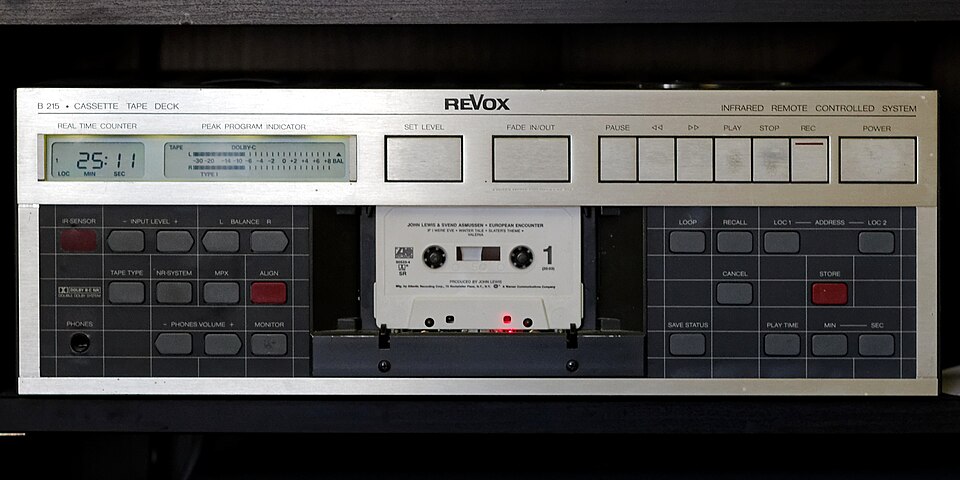
De B215 maakte gebruik van een beproefd, betrouwbaar bandtransport met vier motoren, afgeleid van het eerdere model B710. De B215 onderscheidde zich van de B710 en concurrerende decks uit die tijd door een ongebruikelijk, computerachtig bedieningspaneel en uitgebreide automatisering, uitgevoerd door drie Philips- microcontrollers . Het deck was uitgerust met automatische bandkalibratie, microcontroller-ondersteunde instelling van opnameniveaus en niet-vluchtig geheugen .
De objectieve, onafhankelijk gemeten en geverifieerde specificaties van de Revox evenaarden of overtroffen die van de beste concurrerende decks; vergelijkende tests plaatsten de B215 op hetzelfde niveau als de Nakamichi Dragon en boven de vlaggenschipmodellen van ASC, [ b ] Harman Kardon , Tandberg of TEAC . Recensenten prezen de Revox om zijn voorbeeldige mechanische kwaliteit en de verwachte duurzaamheid van zijn tapetransport, maar bekritiseerden hem om een lager dan verwacht dynamisch bereik en tekortkomingen in bruikbaarheid .
Ontwikkeling en productie
Studer AG , een particuliere Zwitserse fabrikant van professionele audioapparatuur, begon eind jaren zeventig met de ontwikkeling van high-fidelity cassetterecorders . Willi Studer aarzelde om te diversifiëren naar de zeer concurrerende markt voor cassettedecks; gedurende het grootste deel van het decennium beperkte de ervaring van het bedrijf op het gebied van cassettetechnologie zich tot betrouwbare, maar low-fidelity apparatuur voor in het klaslokaal. [ 1 ] [ 2 ] De daling van de verkoop van spoelenrecorders , het commerciële succes van Nakamichi en de " designermodellen " van Bang & Olufsen , in combinatie met druk van binnenuit het bedrijf, overtuigden Studer er echter van om te investeren in het cassetteformaat. [ 2 ] Marino Ludwig, ontwerper van de Revox B77 spoelenrecorder, [ 3 ] onderzocht de beste cassettedecks op de markt en adviseerde Studer over een handelwijze. [ 2 ] Studer ging akkoord met het voorstel en benoemde Ludwig tot hoofd van het cassetteproject, op voorwaarde dat de reputatie van de merken Studer en Revox op geen enkele manier in gevaar zou worden gebracht. [ 2 ]
In september 1980 presenteerde Studer AG zijn eerste cassettedeck, de Revox B710 ; in 1981 werd deze vervangen door de bijna identieke Revox B710 MKII, die Dolby C- ruisonderdrukking toevoegde. In 1982 introduceerde het bedrijf een professionele versie, de Studer A710, uitgerust met gebalanceerde ingangen en uitgangen . [ 4 ] In de Verenigde Staten kostte de B710 MKII $ 1995, [ 5 ] meer dan de rivaal Nakamichi ZX7 ($ 1250), maar minder dan het vlaggenschip Nakamichi 1000ZXL ($ 3800 voor de basisversie, [ 6 ] of $ 6000 voor de "gelimiteerde" editie. [ 7 ] ) De B710 met drie koppen werd ontworpen en gebouwd volgens de normen van professionele reel-to-reel decks; zelfs het frontpaneel en de bedieningselementen werden geleend van de B77-recorder. [ 2 ] De B710 onderscheidde zich van de concurrentie doordat hij een echt viermotorig direct-drive tapetransport had : elk van de twee capstans en de twee spoelen werden aangedreven door hun eigen elektromotor zonder tussenliggende riemen , tandwielen of meelooprollen . [ 2 ] Er waren geen remblokken , riemen, katrollen of tandwielen in het hele transport; zelfs de tapeteller werd aangedreven door een opto-elektronische encoder op de spoelmotoren. Mechanisch gescheiden opname- en afspeelkoppen waren elk instelbaar, maar er was geen voor de gebruiker toegankelijke azimutregeling . De B710 was mechanisch solide, maar miste functionaliteit; belangrijker nog, het deck miste voor de gebruiker toegankelijke tapekalibratieregelaars. Over het algemeen was het ontwerp zeer conservatief. [ 1 ] Marino Ludwig schreef dat de ontwikkeling samenviel met een stortvloed aan nieuwe functies ( Duits : der Flut von Neuheiten ) geïntroduceerd door de Japanners, en slechts een paar, zoals automatische tapetypeherkenning, konden binnen de deadline worden geïmplementeerd . [ 1 ] Niet-geteste nieuwigheden die het product in gevaar konden brengen, zoals dynamische voorspanning , werden van begin af aan afgewezen. [ 1 ]
In 1984 ontwierpen Ludwig en Meinrad Liebert een opvolger van de B710, de B215. [ 2 ] De eerste pre-productiebatch werd eind 1984 geassembleerd; de eerste productiedecks werden begin 1985 naar dealers verzonden. [ 8 ] Een professionele afgeleide, de Studer A721, leek sterk op de B215, maar was uitgerust met gebalanceerde in- en uitgangen en traditionele draaiknoppen voor het volume in plaats van omhoog-omlaagknoppen. De pers plaatste de B215 op gelijke voet met de beste concurrerende decks, en beoordeelde de geluidskwaliteit als hoog, of bijna zo hoog als die van het nieuwe referentiedeck - de Nakamichi Dragon . In de Verenigde Staten kostte de B215 aanvankelijk 'slechts' $ 1390, [ 9 ] lager dan zowel de B710 als de Dragon. 'Betaalbare' prijzen en robuust transport maakten de B215 het deck bij uitstek voor real-time [ a ] cassetteduplicators; Zo exploiteerde het in Vermont gevestigde Revolution Audio in april 1986 een vloot van 200 B215's, 24 uur per dag, vijf dagen per week, en was het van plan er nog eens 200 aan te schaffen. [ 10 ] Het Duitse audiotijdschrift gebruikte een stapel van tien B215's om zijn eigen testcassettes te dupliceren. [ 11 ]
Ludwig schreef dat de prijsdaling de kostenbesparingen weerspiegelde die bereikt werden door het gebruik van grotere printplaten en geautomatiseerde assemblage . [ 12 ] De introductie van de B215 viel ook samen met een recordlage wisselkoers van de Zwitserse frank ten opzichte van de Amerikaanse dollar, die in februari en maart 1985 een historisch dieptepunt bereikte. [ 13 ] Vervolgens steeg de wisselkoers van de Zwitserse dollar gestaag, [ 13 ] en zo ook de Revox-prijzen in Noord-Amerika. In 1989 kostte de B215 $ 2400, [ 14 ] en in 1991 $ 2600. [ 15 ] De verbeterde, cosmetisch herontworpen B215S, geïntroduceerd in 1989, kostte $ 2800–$ 2900 [ 14 ] [ 15 ] — meer dan de Dragon, en drie tot vier keer meer dan hedendaagse vlaggenschipdecks van Onkyo , Pioneer of Sony . [ 15 ]
Tegen die tijd was Willy Studer met pensioen; in 1990 verkocht hij het bedrijf en in 1994 werd het een dochteronderneming van Harman International . [ 16 ] De nieuwe cassettedecks van het merk Revox die onder Harman-management werden verkocht, de consumenten-H11 en de professionele C115, [ 17 ] waren in feite omgedoopte Philips FC-60 / Marantz SD-60-modellen en hadden niets gemeen met de Revox-modellen uit het verleden. [ 18 ] Klassieke vlaggenschipdecks uit de jaren tachtig, zoals de B215, de Dragon of de Tandberg 3014, werden niet meer geproduceerd zonder vervanging. [ 19 ] Verdere verbeteringen van het cassettegeluid vereisten, indien überhaupt mogelijk, aanzienlijke investeringen in onderzoek, maar de bedrijfsmiddelen waren al toegewezen aan digitaal. [ 19 ]
Ontwerp en werking
Uiterlijk en ergonomie
Achteraanzicht van het bandtransport. Twee bronzen vliegwielen onderin zijn rotors van de capstanmotor. Daarboven bevindt zich de solenoïde die het kopsubchassis (midden) optilt en de bijbehorende demper (links, zwart). De B215 is, net als alle Revoxes uit de B-serie, groter dan het typische hifi-onderdeel uit die tijd. [ 20 ] De behuizing meet 45 bij 15 bij 33 centimeter (17,7 inch × 5,9 inch × 13,0 inch) [ 20 ] en is een standaard Studer geperste stalen kast met twee interne verstevigingsrails die het tapetransport dragen. [ 21 ] [ 22 ] Het ontwerp van het voorpaneel volgt de stijl van de B200-serie, die in 1984 werd geïntroduceerd met de release van de B225 cd-speler. [ 23 ] De bedieningselementen voor het tapetransport en de opnamemodus, die op de bovenste aluminium strip zijn geplaatst, zijn visueel gescheiden van secundaire knoppen. [ 23 ] Het laden van de cassette in een open transport gebeurt in twee bewegingen: eerst wordt de bovenrand van een cassette ingebracht, vervolgens wordt de onderkant van de cassette ingedrukt totdat deze vastklikt. [ 21 ] Dit levert geen probleem op bij dagelijks gebruik. [ 21 ] Open tapetransport is minder gevoelig voor azimutscheefstand dan typische gesloten-dekseltransporten, en vereenvoudigt routinematige reiniging en demagnetisatie. [ 21 ] [ 24 ]
De opnameniveaus, de opnamebalans en het hoofdtelefoonvolume worden elektronisch ingesteld met behulp van omhoog-/omlaagknoppen. [ 25 ] [ 26 ] Er zijn geen microfooningangen; ontwerpers achtten die overbodig voor een consumentenproduct. [ 22 ] De markering op het paneel is volgens recensenten van het tijdschrift Audio (USA) exemplarisch: zwarte letters op geborsteld aluminium en witte letters op donkergrijs plastic zijn groot genoeg en vanuit elke kijkhoek gemakkelijk leesbaar. [ 27 ] Het belangrijkste lcd-scherm met achtergrondverlichting is daarentegen te klein, te donker en te moeilijk leesbaar. [ 28 ] [ 24 ] Een ander gebrek aan bruikbaarheid is de afwezigheid van controlelampjes op het voorpaneel; zelfs het kritieke rode lampje 'Record On' ontbreekt (het werd later toegevoegd aan de Studer A721, maar niet aan de B215). [ 28 ] Door deze eigenaardigheden is het lastig om de Revox in een donkere kamer te gebruiken. [ 28 ] Recensenten merkten ook op dat het gebruik van digitale bedieningsknoppen in plaats van draaipotentiometers over het algemeen onhandig was [ 24 ] ( dit laatste kwam weer terug op de Studer A721, maar niet op de Revox-decks).
Bandtransport
Typisch dubbel-capstan-bandtransport uit de jaren 80 gebruikte alleen directe aandrijving voor de voorste (trekkende) capstan; [ 29 ] de achterste (remmende) capstan zou door een riem worden aangedreven op een iets lagere snelheid om de tapespanning binnen de gesloten lus te garanderen, [ 29 ] waardoor er nauw contact tussen alle drie de koppen en de tape wordt gegarandeerd (de drukpad van de cassette kan slechts één kop bevatten), en de tape mechanisch wordt losgekoppeld van de behuizing van de cassette. [ 29 ] Een Revox-deck werkt anders en drijft elke capstan rechtstreeks aan met zijn eigen motor, uitgerust met een enorm vliegwiel en een 150-polige snelheidssensor. [ 30 ] De snelheid van elke motor wordt geregeld door een fasevergrendelde lus ; beide lussen zijn gesynchroniseerd met een gemeenschappelijke kristaloscillator . Volgens Studer werd elke capstan bewerkt met een precisie van 1 μm (0,001 mm of 0,000039 inch), om zeer lage wow en flutter te garanderen. [ 31 ] [ c ] In 1985 was het enige andere dek met een soortgelijke directe aandrijving de vijfmotorige Nakamichi Dragon (de dichtstbijzijnde concurrent, de viermotorige Tandberg 3014, gebruikte één enkele kaapstandermotor). [ 32 ]
Twee andere motoren van de B215, diep in het mechanisme begraven, drijven de spoelen van de cassette rechtstreeks aan. Motoren, capstans en spoelspindels zijn gemonteerd op twee spuitgietchassisplaten, stevig aan elkaar geschroefd; koppen en aandrukrollen zijn gemonteerd op een bewegend spuitgietsubchassis. [ 31 ] [ 33 ] [ c ] Alle vier de motoren worden elektromagnetisch geremd; er zijn geen mechanische remblokken of frictiewielen. [ 33 ] [ c ] Autostop wordt geactiveerd met een opto-isolator die de aanwezigheid van transparante aanloopband detecteert . [ 27 ] Het opwinden van een band van 90 minuten duurt niet langer dan 75 seconden, [ 20 ] [ 28 ] bij een constante lineaire bandsnelheid. [ 34 ] Als de microcontroller om welke reden dan ook een abnormaal hoge bandspanning detecteert, verlaagt hij onmiddellijk de opwindsnelheid. Aan het einde van de spoel wordt de bandsnelheid geleidelijk verlaagd om impact op het einde van de band te voorkomen. [ 34 ] [ 22 ] Volgens Howard Roberson van het tijdschrift Audio (VS) was de werking van een nieuw B215-transport "...erg stil, zelfs in de afspeelmodus - misschien wel het stilste van alle tot nu toe geteste decks... zeer goed gebouwd, met een duidelijke uitstraling van betrouwbaarheid op de lange termijn". [ 21 ]
De B215 gebruikt sendust- en ferrietkoppen van Canon (de B710 gebruikte Sony-koppen, de Revox reel-to-reel-koppen werden door Studer zelf vervaardigd). [ 35 ] De afspeelkop heeft een smalle magnetische opening, de opnamekop heeft een brede opening, maar de exacte breedtes van de openingen zijn niet bekendgemaakt. [ 2 ] [ 22 ] In tegenstelling tot de B710 zitten de opname- en afspeelkoppen van de B215, en een isolatiewig ertussen, strak tegen elkaar aan en kunnen niet afzonderlijk worden afgesteld. [ 22 ] Recensenten van Audio and Modern Electronics merkten een exemplarisch laag faseverschil op tussen het linker- en rechterkanaal (interchannel time error, ICTE), wat een teken was van een zeer goede uitlijning van de opname- en afspeelopeningen en een verwaarloosbaar lage relatieve azimutfout. [ 36 ] [ 37 ]
Audiopad
Het audiopad beslaat drie printplaten, die elk de volledige diepte van de behuizing beslaan. Van boven naar beneden: opnameprintplaat, afspeel- en besturingsprintplaat, Dolby-printplaat. Het signaalpad van de B215 is vanaf de grond af ontworpen voor gebruik met Dolby C- ruisonderdrukking. [ 12 ] De gebruikershandleiding adviseerde dat "het selecteren van ruisonderdrukking voor nieuwe platen eenvoudig is: gebruik [alleen] Dolby C". [ 38 ] Het deck maakt gebruik van vier Hitachi HA12058 Dolby B/C IC's in een "dubbele Dolby"-configuratie met onafhankelijke coderings- en decoderingskanalen. [ 39 ] Het tapetype wordt automatisch gedetecteerd, maar de gebruiker kan het tapetype handmatig overschrijven en selecteren. Dit omvat een optie om Type II (maar geen Type IV) tapes op te nemen met een equalizer van 120 μs, [ 40 ] wat wellicht de voorkeur geniet bij het opnemen van signalen met sterke hoge tonen, ten koste van meer ruis. [ d ]
De B215 replay head-versterker gebruikte een discrete JFET- ingang en een bipolaire tweede trap; deze stuurt de equalizertrap aan - een actief filter gebouwd rond een operationele versterker in inverterende configuratie . [ 41 ] Subtiele fasecontrolenetwerken in het actieve filter werden afgestemd op de best mogelijke staprespons ; Ludwig schreef dat ze " blokgolfreproductie van de tape van werkelijk professionele kwaliteit" mogelijk maakten. [ 12 ] Het signaal gaat vervolgens door een CMOS- schakelaar naar de Dolby-decoder en vervolgens door een andere CMOS-schakelaar naar de uitgangsbuffertrap. [ 41 ] Een derde set CMOS-schakelaars wordt ingeschakeld om een tijdconstante van 70 μs te selecteren in plaats van de standaard 120 μs; als gevolg hiervan gaat het signaal tijdens het afspelen door twee of drie CMOS-schakelaars, plus de schakelaars in de Dolby-decoder. [ 41 ] De schakelaars injecteren onvermijdelijk hun eigen vervormingsproducten in het signaal; hun prestaties kunnen worden verbeterd door vervanging van de standaard 14000-serie schakelaars voor nieuwere pin-compatibele IC's met lage impedantie. Het lijnuitgangsniveau is vast en ongebruikelijk "heet" voor consumentenaudio: 775 mV RMS voor een nominaal magnetisatieniveau van 250 nWb/m. [ 42 ] De hoofdtelefoonuitgang heeft acht selecteerbare volume-instellingen, wat voldoende is voor praktisch gebruik. [ 20 ]
Het opnamepad van de audio, dat een eigen printplaat in beslag neemt, is veel complexer. Er zijn drie elektronische niveauregelaars, in serie geschakeld. Continu variabele fade-in en fade-out wordt uitgevoerd door een analoge transconductantieversterker . [ 43 ] Signaalniveaus bij de ingang van de Dolby-encoder ("opnameniveau") en bij de uitgang ("tapegevoeligheid") worden geregeld door 8-bits vermenigvuldigende DAC's . [ 43 ] Ten slotte selecteert een CMOS- multiplexer , gekoppeld aan een laag-Q banddoorlaatfilter gecentreerd op 4 kHz, de gewenste middentonen- equalisatie-instelling. [ 43 ] Nog een andere set 8-bits vermenigvuldigende DAC's, gekoppeld aan een niet-uitschakelbaar Dolby HX Pro- circuit, stelt de gewenste biasstroom in. [ 43 ] Dolby dynamische biasing verbetert, volgens Stereo Review , de verzadigingsniveaus van de hoge tonen met ongeveer 6 dB. [ 44 ]
Microcontrollers en embedded software
Drie Philips MAB8440 microcontrollers en EEPROM (rechts, met papieren label) De besturingsfuncties van het deck zijn verdeeld over drie identieke Philips MAB8440- microcontrollers [ 12 ] , die worden geklokt met een gemeenschappelijke6 MHz kristal . [ 45 ] Elke microcontroller draagt4 kB programmageheugen en 128 bytes RAM . [ 45 ] De eerste microcontroller controleert het frontpaneeltoetsenbord, de infraroodafstandsbedieningspoort en een optisch ontkoppelde RS-232- poort; de tweede bestuurt de motoren en berekent realtime tapetellerwaarden. De derde microcontroller beheert de digitaal-naar - analoogconverters , CMOS-switches, multiplexers en de opnameniveaumeter; hij voert het tapekalibratieprogramma uit en slaat de huidige instellingen op in niet-vluchtig geheugen . [ 12 ] Het EEPROM wordt bijgewerkt bij elke overgang naar de stand-bymodus of wanneer de gebruiker op een speciale "store"-knop drukt. [ 46 ] [ 47 ] De microcontrollers, display en DAC-drivers zijn verbonden met de I²C seriële bus, [ 45 ] die begin jaren tachtig door Philips werd geïntroduceerd; volgens Ludwig was een gestandaardiseerde bus een vereiste voor een project van een dergelijke omvang. [ 12 ]
De B215 is uitgerust met een unieke realtime tapeteller. [ 48 ] Nadat de gebruiker een cassette heeft geplaatst (teruggespoeld of niet) en op de afspeelknop heeft gedrukt, schat de ingebouwde software de huidige tapepositie door de hoeksnelheden van de cassettespoelen te vergelijken. [ 48 ] De eerste schatting duurt 5–8 seconden. Het deck schat ook de volledige speelduur van een cassette, zij het met onzekerheid; om de foutmarge te verkleinen, kan de gebruiker de speelduur handmatig instellen op 46, 60, 90 of 120 minuten. [ 48 ] Met deze prompt, volgens recensenten van Audio magazine, bedraagt de absolute fout niet meer dan één minuut voor een C90-cassette. [ 20 ]
De transportbesturingssoftware van de B215 heeft een eigenaardige eigenaardigheid waardoor het volledig terugspoelen van de tape onmogelijk is. Nadat het deck het terugspoelen heeft voltooid, of nadat de gebruiker een reeds teruggespoelde cassette heeft geplaatst, controleert de B215 op de aanwezigheid van ondoorzichtige magneetband in het tapekanaal. Als de opto-elektronische sensor transparante aanloopband detecteert, spoelt het deck de tape langzaam vooruit totdat de sensor ondoorzichtige tape tegenkomt; deze functie kan niet handmatig worden uitgeschakeld. Het deck is dan klaar voor afspelen of opnemen, hoewel het uitvoeren van automatische kalibratie aan het begin van de magneetband ongewenst is; de gebruiker moet de tape handmatig doorspoelen naar een willekeurig punt halverwege de rol, daar kalibratie uitvoeren en handmatig terugspoelen. [ 49 ] [ 20 ]
Tape-kalibratie
In 1985 werd tapekalibratie, die ontbrak in de Revox B710, de facto de standaardfunctie in de industrie voor topmodellen. [ 50 ] [ 51 ] Reel-to-reel recorders hadden dit niet nodig omdat de kwart-inch tapetechnologie zich langzaam ontwikkelde, de tapes op de markt zeer vergelijkbare magnetische en elektroakoestische eigenschappen hadden, en omdat opnemen op hoge snelheid per ontwerp minder gevoelig was voor variaties in de tape-eigenschappen. [ 50 ] Cassettetapetechnologie ontwikkelde zich daarentegen snel en nieuw ontworpen premiumformules verschilden consequent van IEC-referentiebanden of de oudere, goedkopere tapes. [ 50 ] Het probleem bestond al in 1983: de B710, die in de fabriek was afgestemd op TDK SA-X ferricobalt Type II-tape , had een uitgesproken hogetonenverval bij opname op zuiver chroom IEC Type II-referentiebanden . [ 52 ]
Meinrad Liebert bekritiseerde de IEC omdat deze geen strikte normen had opgelegd: de organisatie volgde simpelweg de markt en paste periodiek haar set referentietapes aan willekeurig gekozen "industriegemiddelden" aan. [ 50 ] De ongecontroleerde verspreiding van incompatibele cassettes maakte traditionele cassettedecks met vaste bias vrijwel onbruikbaar voor opnames; dit verklaarde volgens Liebert de plotselinge vraag naar kalibratiefuncties die in de jaren zeventig niet bestonden. [ 50 ] Het ontwerpteam van Revox koos voor geautomatiseerde kalibratie, hoewel de toen gangbare handmatige kalibratie niet alleen goedkoper, maar ook robuuster was. Een menselijke operator heeft een inherent voordeel bij het omgaan met onvermijdelijke drop-outs, transiënten en langzame fluctuaties in de gevoeligheid van de tape; [ 53 ] [ 51 ] volledig automatische kalibratie kon vaak niet omgaan met willekeurige onregelmatigheden en kon verschillende "optimale punten" voor dezelfde tape genereren. [ 53 ]
Van de drie of vier beschikbare kalibratiestrategieën koos Liebert de meest flexibele en robuuste benadering van constante hoge tonen-equalisatie - waarbij de bias en het opnameniveau werden aangepast terwijl de equalisatie van het opnamekanaal ongewijzigd bleef, met een extra aanpassing van de frequentierespons rond de 4 kHz. [ 53 ] In tegenstelling tot de meer gebruikelijke tweetonige opstelling gebruikte de Revox dus drie testtonen [ 12 ] (de exclusieve Nakamichi 1000ZXL gebruikte er vier [ 7 ] ). Hoewel Studer er de voorkeur aan gaf deze functie alignment te noemen , heeft dit alleen invloed op de elektronica van het opnamepad en voert het geen mechanische uitlijning uit. [ 47 ] In het voorjaar van 1985 werd de kalibratiesequentie door testers van het tijdschrift Audio reverse-engineered , [ 21 ] en twee jaar later publiceerde Liebert een beschrijving van het algoritme uit de eerste hand:
- Grove aanpassing van de bias (17 kHz testtoon);
- Gevoeligheidsinstelling ("niveau") (400 Hz testtoon);
- Fijne afstelling van bias (17 kHz testtoon);
- Aanpassing van de middentonen-equalisatie (4 kHz testtoon). [ 53 ]
De B215 past de bias en gevoeligheid afzonderlijk aan in elk kanaal, en de midrange-equalisatie wordt gelijktijdig in beide kanalen uitgevoerd. [ 54 ] De bias en gevoeligheid worden ingesteld met 8-bits DAC's met behulp van een binair zoekalgoritme , zodat elk van de zes aanpassingen slechts acht elementaire metingen in beslag neemt. [ 53 ] Bij 400 Hz duurt elke meting ongeveer 0,4 s: 0,1 s om de tape van de opnamekopopening naar de afspeelkop te laten lopen, en ongeveer 0,3 s om de detector tot rust te laten komen . [ 53 ] Bij 17 kHz duurt de meting nog langer, omdat de testtoon wordt opgenomen in korte bursts van 120 ms (om ongewenste overspraak van de opnamekop naar de afspeelkop te onderdrukken). [ 53 ] De volledige testsequentie duurt volgens Liebert ongeveer 25 s; [ 53 ] onafhankelijke reviewers hebben zelfs lagere tijden van ongeveer 20 s geciteerd. Dit was nog steeds veel langer dan de typische 4 tot 8 seconden die andere auto-kalibratiedecks van dezelfde generatie bereikten, [ 51 ] en bijna de 30 seconden die volgens Liebert "het geduld van de gebruiker op de proef zou stellen". [ e ]
Tests en beoordelingen
Onafhankelijke metingen
Specificaties gepubliceerd door Studer waren zeer conservatief en onthulden niet het ware potentieel van het deck. [ 55 ] Directe vergelijking met Japanse concurrenten was onmogelijk, vooral wat betreft tape transport parameters. De wow en flutter rating van 0,1% van de B215 is bijvoorbeeld een maximale waarde geïnterpreteerd volgens DIN 45507 / IEC 386 , [ 56 ] terwijl de concurrenten doorgaans veel lagere root mean square (RMS) getallen gaven. Onafhankelijke tests uitgevoerd door de pers in de jaren 1980 maten van 0,01% tot 0,042% RMS, en van 0,016% tot 0,07% maximum. [ 20 ] [ 57 ] [ 26 ] [ 36 ] [ f ] Zelfs de hoogste RMS-waarde van 0,042% werd beschouwd als "opmerkelijk laag"; [ 36 ] de B215 overtrof de concurrentie of evenaarde deze met de Nakamichi Dragon. [ 44 ] [ 36 ] [ 28 ] [ 58 ] Craig Stark van Stereo Review gaf toe dat de cijfers zo dicht bij de grenzen van testinstrumenten lagen dat gemeten verschillen tussen de decks in deze klasse waarschijnlijk niet van belang waren. [ 44 ] De absolute snelheid op de lange termijn, typisch voor alle kwartsgestuurde dubbel-capstan-transporten, [ g ] was consistent 0,2–0,3% sneller dan de standaardsnelheid en vrijwel ongevoelig voor schommelingen in de netspanning. [ 20 ] [ 26 ] [ 57 ] [ 28 ]
Het dynamische bereik van de B215, begrepen als het verschil tussen het A-gewogen bias-ruisniveau en het maximale uitgangsniveau bij 400 Hz, was vergelijkbaar met dat van de Tandberg 3014, maar consequent slechter dan dat van de Dragon of de Onkyo 2900. Het dynamische bereik in het slechtste geval, gemeten met kwaliteitsband van Type I zonder ruisonderdrukking en spectrale weging, was slechts gelijk aan51 dB vergeleken met de Dragon's54 dB . Beide decks hadden ongeveer dezelfde ruisvloer, bepaald door de bias-ruis (gesis) van de tape in plaats van elektronica; de Revox verloor door lagere maximale uitgangsniveaus. Volgens tests van Audio and Stereo Review bereikte de B215 met Type I- en Type IV-tapes 3% vervorming bij slechts 3–4 dB boven het Dolby-niveau, terwijl de Dragon Type IV-tapes kon opnemen en reproduceren tot wel +10 dB. Howard Roberson van Audio opperde dat de smalle overbelastingsmarge van de Revox een prijs was die betaald werd voor zijn brede frequentierespons. [ 37 ]
Nederlands De B215-gebruikershandleiding specificeerde een frequentierespons van 30–18000 Hz (+2/-3 dB) voor Type I-tapes en 30–20000 Hz (+2/-3 dB) voor Type II en IV. [ 56 ] Opnieuw lieten onafhankelijke tests zien dat de prestaties de conservatieve specificaties van Studer ruimschoots overtroffen. De lage frequentierespons, gemeten door het tijdschrift Audio op -20 dB ten opzichte van het Dolby-niveau, strekt zich uit van 9–23100 Hz (± 3 dB) voor Type I- en Type IV-tapes, en tot 24500 Hz (± 3 dB) voor Type II-tape. [ 37 ] [ h ] Op Dolby-niveau, waar de frequentierespons grotendeels wordt beperkt door de tapeverzadiging in plaats van door de speler, mat de Revox 23–14100 Hz voor Type I, 23–16000 Hz voor Type II en 24–17000 Hz voor Type IV. [ 37 ] [ h ] Het gebruik van Dolby C verbreedt de schijnbare bovengrens op Dolby-niveau tot 21–23 kHz. [ 37 ] [ h ] Over het geheel genomen is de Revox-treble-extensie lager dan het record dat is gevestigd door de Nakamichi 1000ZXL (26–28 kHz [ 6 ] ), maar is typisch voor alle vlaggenschipmodellen van midden jaren tachtig. [ 55 ] Het belang van deze parameter werd vaak overdreven door hifi-enthousiastelingen en de op consumenten gerichte pers; professionals vonden het niet belangrijk omdat elk professioneel deck gemakkelijk de 20 kHz-grens overschreed. [ 55 ] De kwaliteit van de kalibratie, een vereiste voor een goede treble-respons, werd als zeer hoog beoordeeld; [ 20 ] [ 44 ] [ 28 ] De B215 wist gemakkelijk de verschillen uit te wissen tussen tapes die zo verschillend waren als BASF CR-M (multilayer chroom, aanbevolen door Studer [ 55 ] [ 44 ] ) en TDK SA (enkellaags ferricobalt). [ 44 ]
De lage frequentierespons van banden die zijn opgenomen en afgespeeld op de B215 vertoont een opvallend kamvormig patroon onder de 30 Hz. [ 59 ] [ 26 ] [ 60 ] Deze "kopbobbels", die wijzen op een sterk contoureffect , verschijnen alleen tijdens het opnemen. [ 21 ] [ 61 ] De frequentierespons van de afspeelband, gemeten met testbanden, is exemplarisch vlak, [ 21 ] [ 61 ] vergelijkbaar met die van de Nakamichi Dragon, en merkbaar beter dan die van de Tandberg 3014. [ 61 ]
Algemene evaluatie
Recensenten tussen 1985 en 1988 gaven de B215 unaniem uitstekende beoordelingen, met name voor de kwaliteit van het bandtransport. Len Feldman van Modern Electronics schreef: "... over het algemeen ... is het werkelijk een Rolls-Royce onder de cassetterecorders. Zijn merk ontloopt prestige. Bovendien is hij gebouwd om lang mee te gaan en om na vele jaren gebruik aan alle gepubliceerde specificaties te blijven voldoen of deze zelfs te overtreffen." [ 28 ]
In vergelijkende tests door Stereo Review (Verenigde Staten, 1988) en Audio (West-Duitsland, 1985) werd de B215 gerangschikt als een van de twee beste decks op de markt, de andere was de Nakamichi Dragon. [ 58 ] [ 62 ] De B215 overtrof de Dragon op mechanisch gebied, met een eenvoudiger, robuuster en duurzamer bandtransport. [ 58 ] De B215 verloor van de Dragon op het gebied van dynamisch bereik, subjectief niveau en het spectrum van ruis; andere subjectief gedetecteerde verschillen in sonische handtekeningen waren onbeduidend en konden in het voordeel van beide deelnemers worden geïnterpreteerd. [ 58 ] Op klankgebied overtroffen zowel de B215 als de Dragon de eveneens dure ASC [ b ] en Tandberg decks en de veel goedkopere vlaggenschipmodellen van Harman Kardon , Onkyo en TEAC . [ 58 ] [ 62 ]
De Dragon had een voorsprong op de B215 en alle andere concurrenten vanwege het automatische azimutcorrectiesysteem. [ 63 ] De Dragon kon gemakkelijk banden "verteren" die waren opgenomen op andere, vaak verkeerd uitgelijnde, apparatuur. [ 63 ] Zijn zeskanaals, azimut-sensorische afspeelkop bleef een eenhoorn, een ongekend hoogtepunt van cassettetechnologie. Afgezien van een kortstondige poging van Marantz heeft geen enkele concurrent ooit geprobeerd deze te kopiëren. [ 64 ] De productie en aftermarket-service van azimut-sensorkoppen bleken zelfs voor Nakamichi te moeilijk, en in plaats van de Dragon-lijn te ontwikkelen, begon het bedrijf met de productie van unidirectionele automatisch omkerende decks die de cassette fysiek omdraaiden in plaats van het transport om te keren. [ 64 ]
Notities
a. Voor het dupliceren van grote volumes en goedkope cassettes werden industriële machines gebruikt die 16, 32 of zelfs 64 keer sneller draaiden dan normaal. Duplicatie op hoge snelheid was goedkoop, maar ging ten koste van de geluidskwaliteit. Een realtime duplicator gebruikte normale cassettedecks van hoge kwaliteit die op normale snelheid draaiden. Deze tapes konden zo goed klinken als de cassettetechnologie toeliet, maar realtime duplicatie was duur en alleen geschikt voor kleine oplages.
b. ASC (Audio System Components) was een kleine Duitse fabrikant van hifi-apparatuur voor thuisgebruik, beter bekend om hun spoelenrecorders op basis vanBraun-transportbanden. Na de teloorgang van de hifi-industrie schakelde het bedrijf over op industriële dataregistratiediensten en is het anno 2020 nog steeds actief onder de naam ASC Technologies AG.
c. Referentie beschrijft de B710
d. Overschakelen van 70 μs naar 120 μs verhoogt het A-gewogen ruisniveau met ongeveer 4 dB en verhoogt het schijnbare verzadigingsniveau van de hoge tonen met dezelfde 4 dB. Het werkelijke verzadigingsniveau, in termen van tapemagnetisatie, blijft ongewijzigd, maar het schijnbare niveau wordt versterkt door een equalizerfilter.
e. Liebert schreef dat alles wat langer duurt dan 30 seconden “het geduld van de gebruiker op de proef zal stellen”. [ 53 ]
f. In alle gevallen hadden de getallen betrekking op één specifieke steekproef. Deze getallen zijn slechts indicatoren van de prestaties van het deck en gelden niet voor de gehele populatie.
g. Fabrikanten maakten nieuwe decks opzettelijk 0,2–0,5% sneller dan de standaard. Naarmate de decks ouder werden, zorgde slijtage van de kaapstander ervoor dat de snelheid geleidelijk terugliep naar de standaardsnelheid. Kleine snelheidsverhogingen werden als veel minder schadelijk beschouwd dan kleine snelheidsverlagingen.
h. In alle gevallen gebruikte AudioMagazine de beste, duurste tapeformules - Maxell UD-XLI, TDK HX-S, TDK MA-R. [ 37 ] De Type II TDK HX-S was in feite een tape met metaaldeeltjes, ontworpen om te werken op een Type II bias. Testers selecteerden doelbewust de tapes die de beste resultaten opleverden met de B215, terwijl andere premiumformules niet zo goed presteerden. [ 37 ]
Otari NAB Adapters
There are several types of Otari NAB adapters, but this article is about this one:
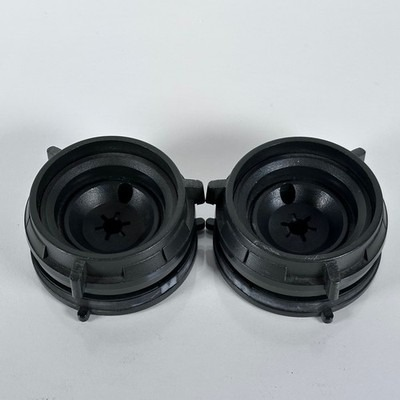
These adapters have a rubber belt along the side that is often broken after all thee years. I measured the dimensions of the belt and here it is:
| width: | 7 mm |
| thickness: | 1,5 mm |
| folded in half: | ~ 100-105 mm |
| diameter: | ~ 64 mm |
| circumference: | ~ 200 mm |
| radius: | ~ 32 mm |
Also beware of the 6 (3x2) small pucks that can -and will!- fall out when you remove the rubber belt.
Revox NAB Adapters
The classic and often most wanted Revox NAB adapters have a rubber O-ring with the following dimensions:
| diameter: | 65 mm |
| width: | >3 mm |